Did you know that every designer has a specific logo design process they follow? Skipping even one step in the process can result in problems. With over seven years of experience as a logo design and branding agency, we can confirm that these 7 steps are essential in the process of creating a logo:

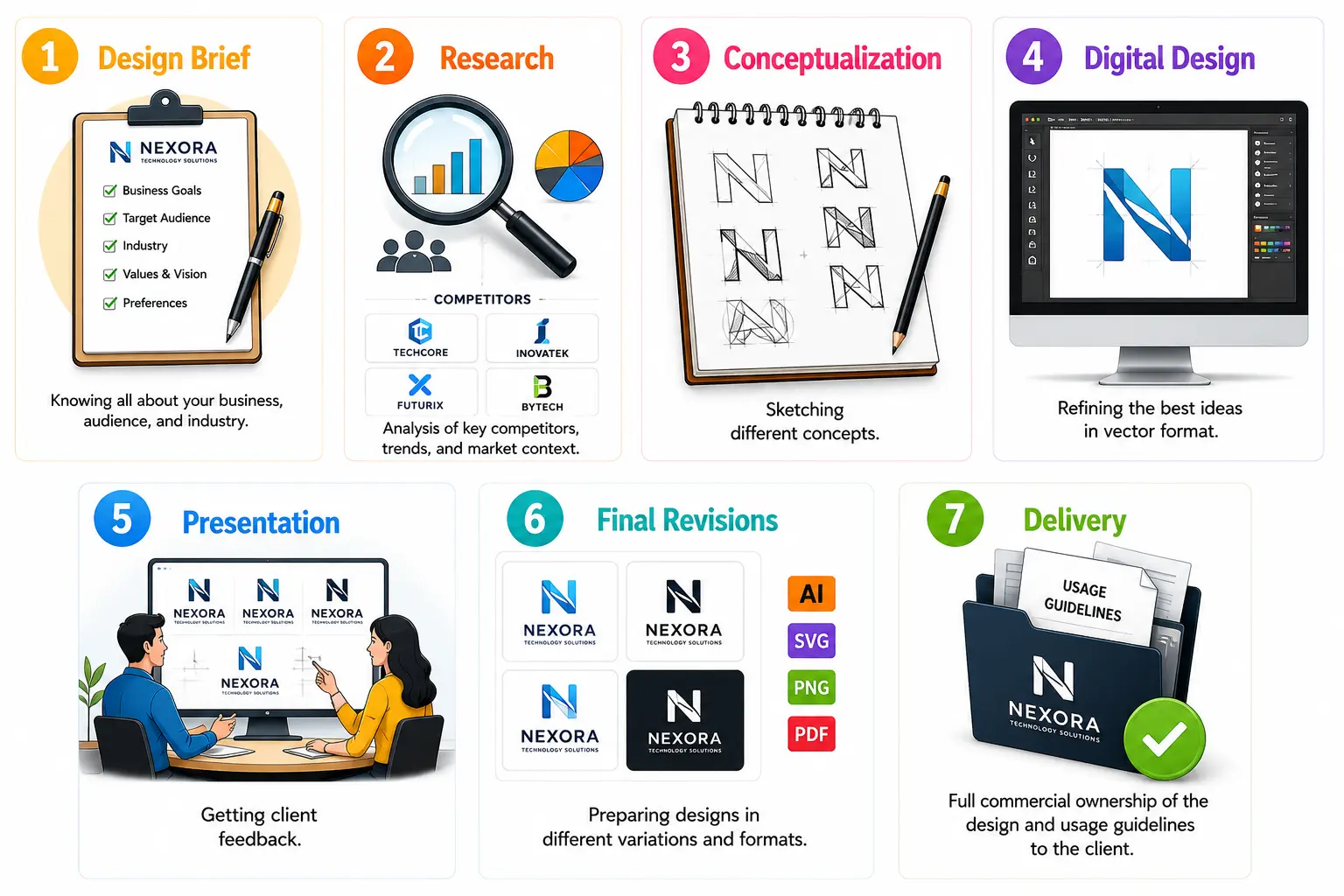
- Design Brief: Knowing all about your business, audience, and industry.
- Research: Analysis of key competitors, trends, and market context.
- Conceptualization: Sketching different concepts.
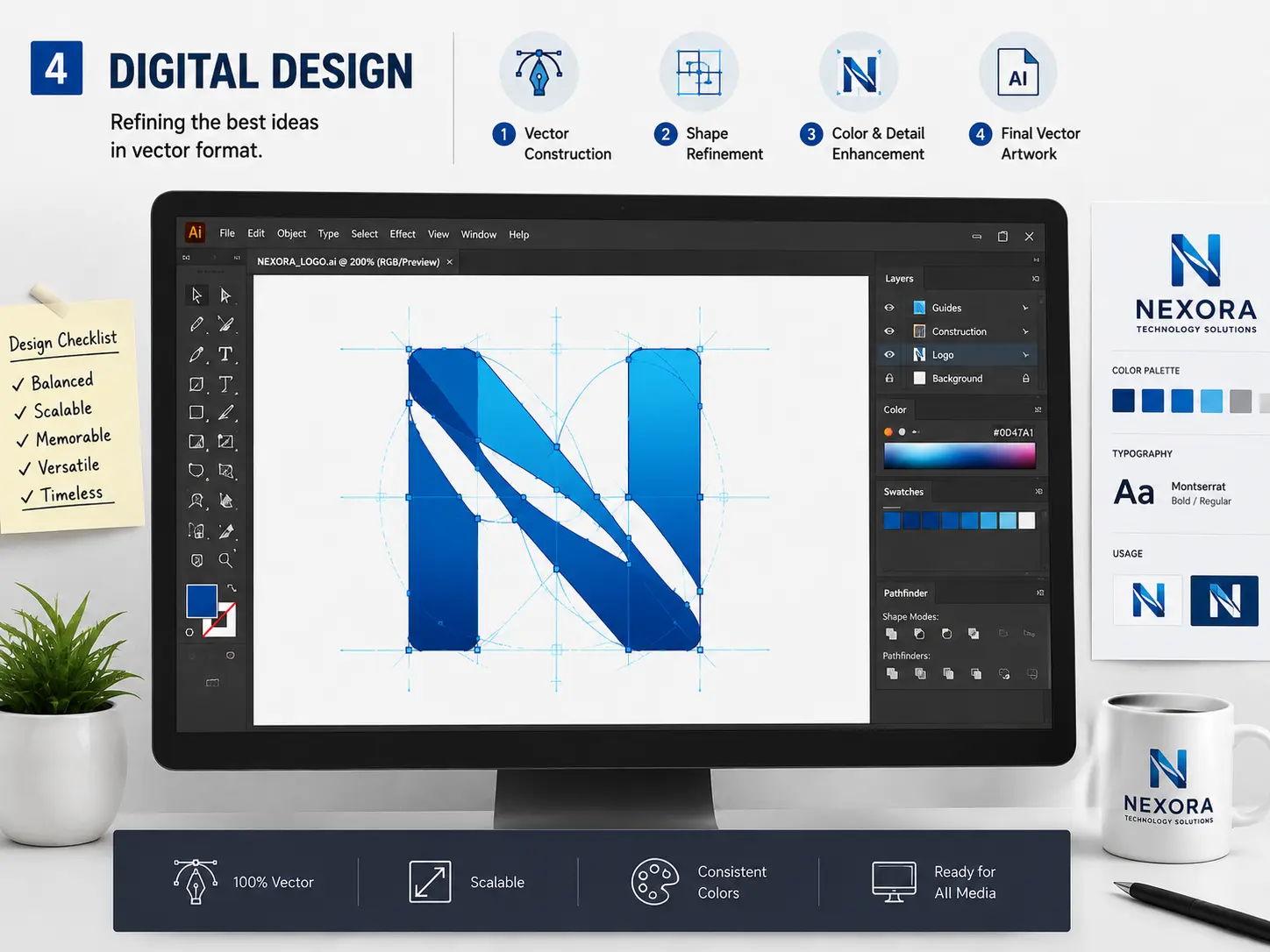
- Digital Design: Refining the best ideas in vector format.
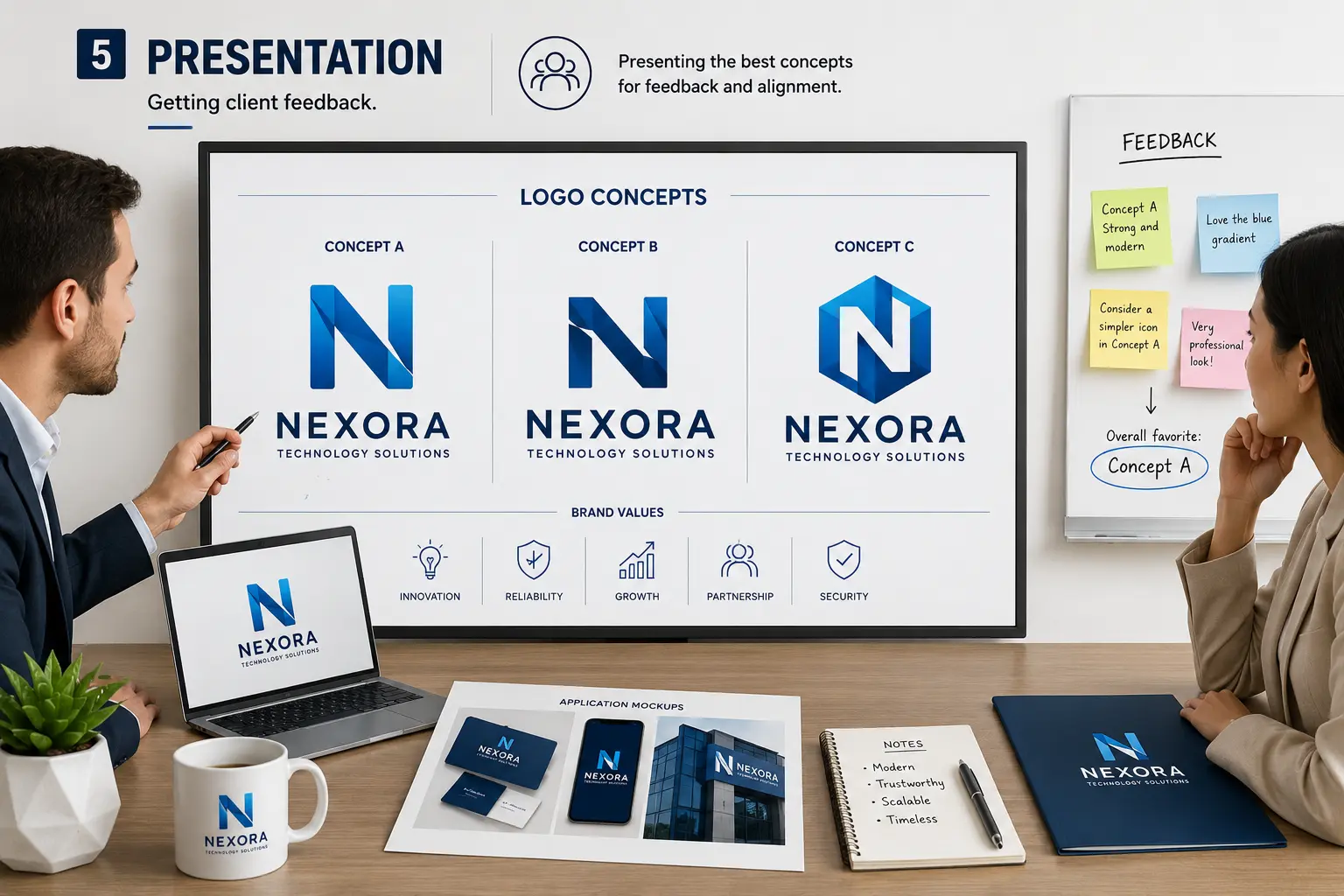
- Presentation: Getting client feedback.
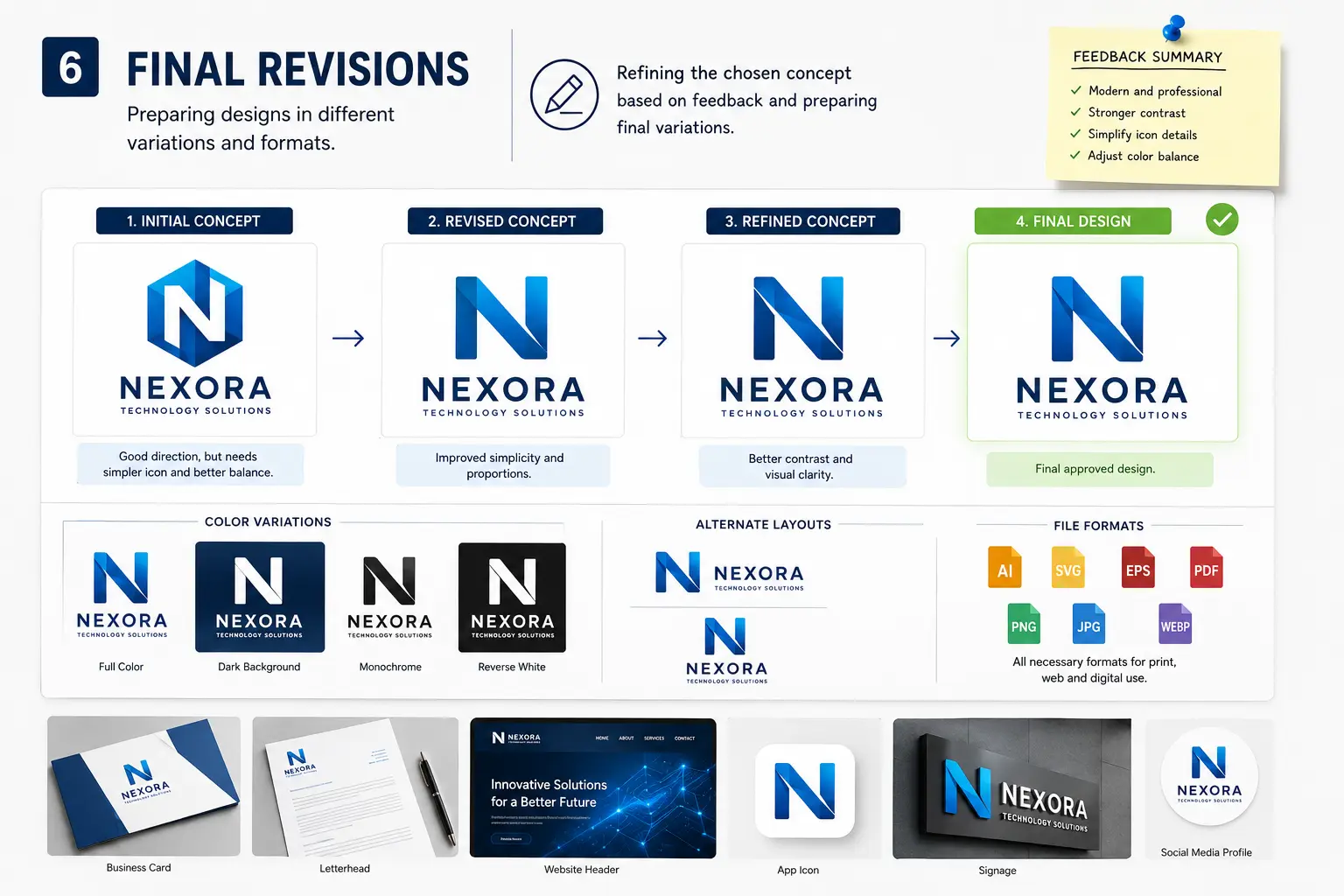
- Final Revisions: Preparing designs in different variations and formats.
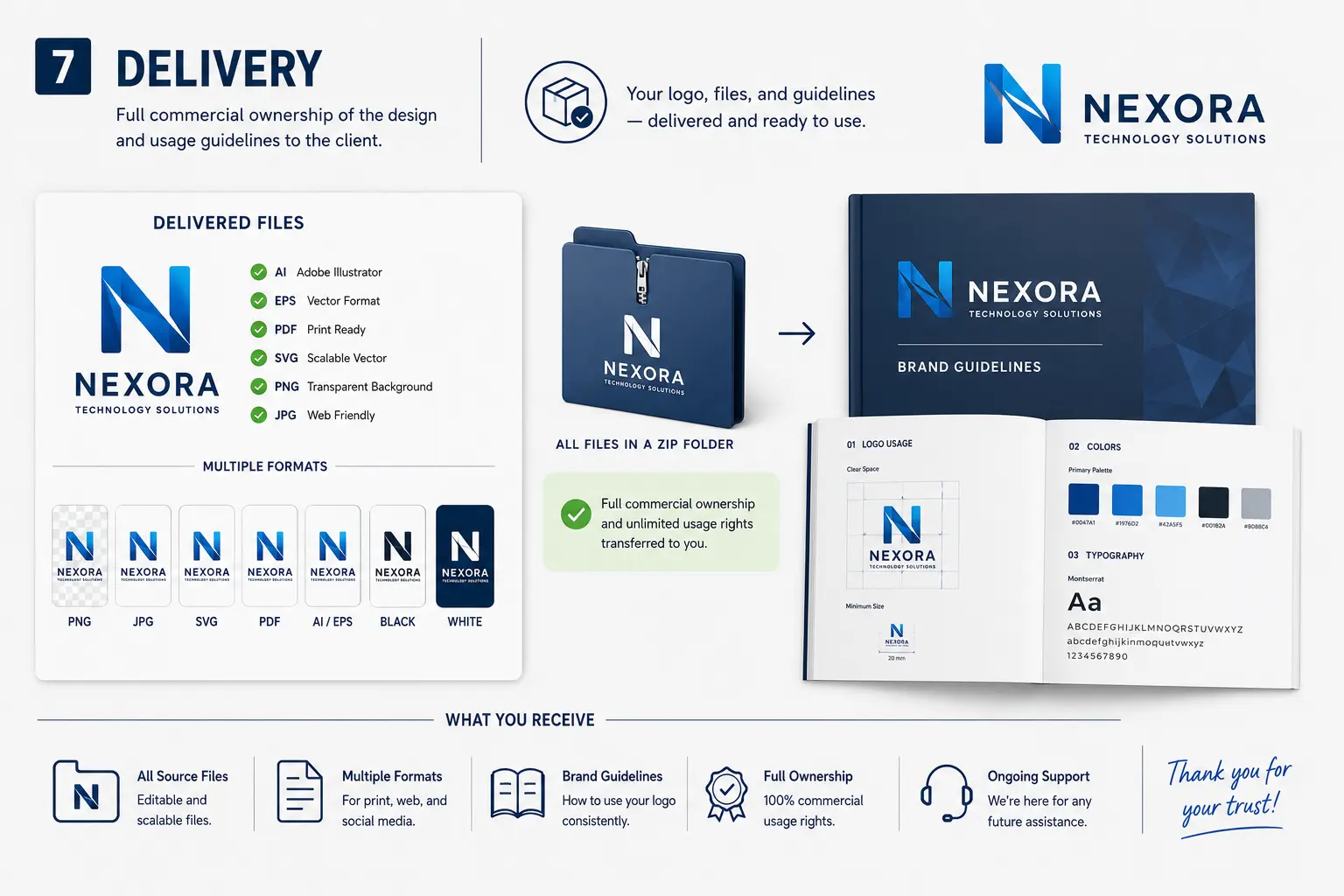
- Delivery: Full commercial ownership of the design and usage guidelines to the client.
Every logo designer or logo design company has their own logo design process steps. If your logo design is missing important details or does not fully match what you had in mind, a key step was most likely ignored. It might seem like a small mistake, but it has a big impact in the long term. This complete guide on the logo design process will help you understand which steps shouldn’t be missed.
Ready to Start Your Logo Design Process?
Logo design processes don’t have to be complicated. Our team delivers exceptional logos at the lowest prices without missing a single step.
What Is the Logo Design Process and Why Does It Matter for Your Brand?
Logos are not about “just make it look good.” A logo design process is a step-by-step approach to designing a logo from scratch. It involves research, conceptualization, refinements, feedback, and final delivery. The whole designing a logo process sets the right benchmark for quality.
The Difference Between a Logo and a Brand Identity
The terms “logo” and “brand” are often used together. However, there is a major difference between a brand logo design and branding. A logo is the face of your business. It’s a symbol or wordmark that identifies your business. Branding, on the other hand, is a broader concept, and the logo is a core part of it, along with the color palette, typography, packaging, imagery, and more.
| Logo | Brand Identity |
| A single graphic mark or wordmark | The full visual and emotional expression of a brand |
| Helps people recognize a company | Helps people understand and remember a company |
| Usually includes a symbol, typography, or icon | Includes logo, colors, typography, imagery, tone of voice, packaging, UI style, motion, and guidelines |
| One asset | A whole system |
| Answers: “Who is this?” | Answers: “What is this brand like?” |
Why Skipping the Process Leads To Generic, Inconsistent Branding
As one senior designer put it in a widely-shared Reddit thread: “If you just open Illustrator and start drawing, you’ll end up with something that looks like a clip-art mashup.” Skipping the discovery and research phases means:
- Your logo solves an aesthetic problem, not a strategic one.
- You have no framework for making consistent decisions across future brand materials.
- You are more likely to need an expensive redesign within 12–18 months.
The 7 Steps of a Professional Logo Design Process
This step-by-step logo design process is a standard framework followed by designers and modern logo design agencies. Skipping even a single step can lead to a generic logo that is not relevant to your business.
Step 1: Discovery & Design Brief Know Before You Draw
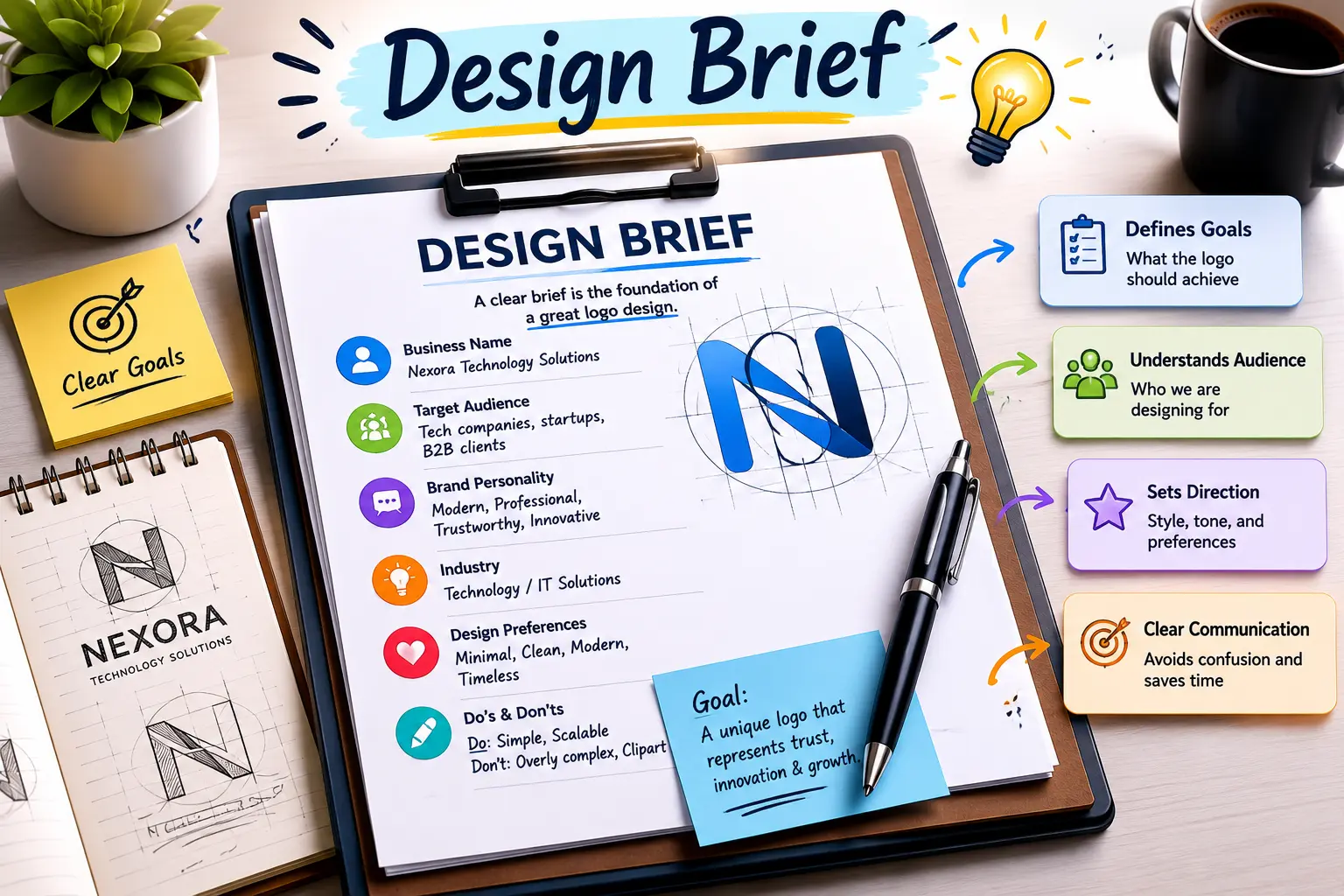
The design brief is the single most important document in the whole logo design process. It includes key details about the business, brand personality, competitors, industry scope of the work, and final deliverables. Most of the information needed to design a logo is in the design brief.

What a good design brief includes:
- Business name, industry, and core offering
- Target audience demographics and psychographics
- Brand personality (three to five adjectives: e.g., bold, approachable, technical)
- Competitor logos to avoid visual overlap with
- Logos you admire and why, inspirations
- Color and style preferences with reasoning
- Intended use contexts: web, print, embroidery, signage
- Revision rounds and delivery timeline
Step 2: Research Competitors, Audience & Market Context
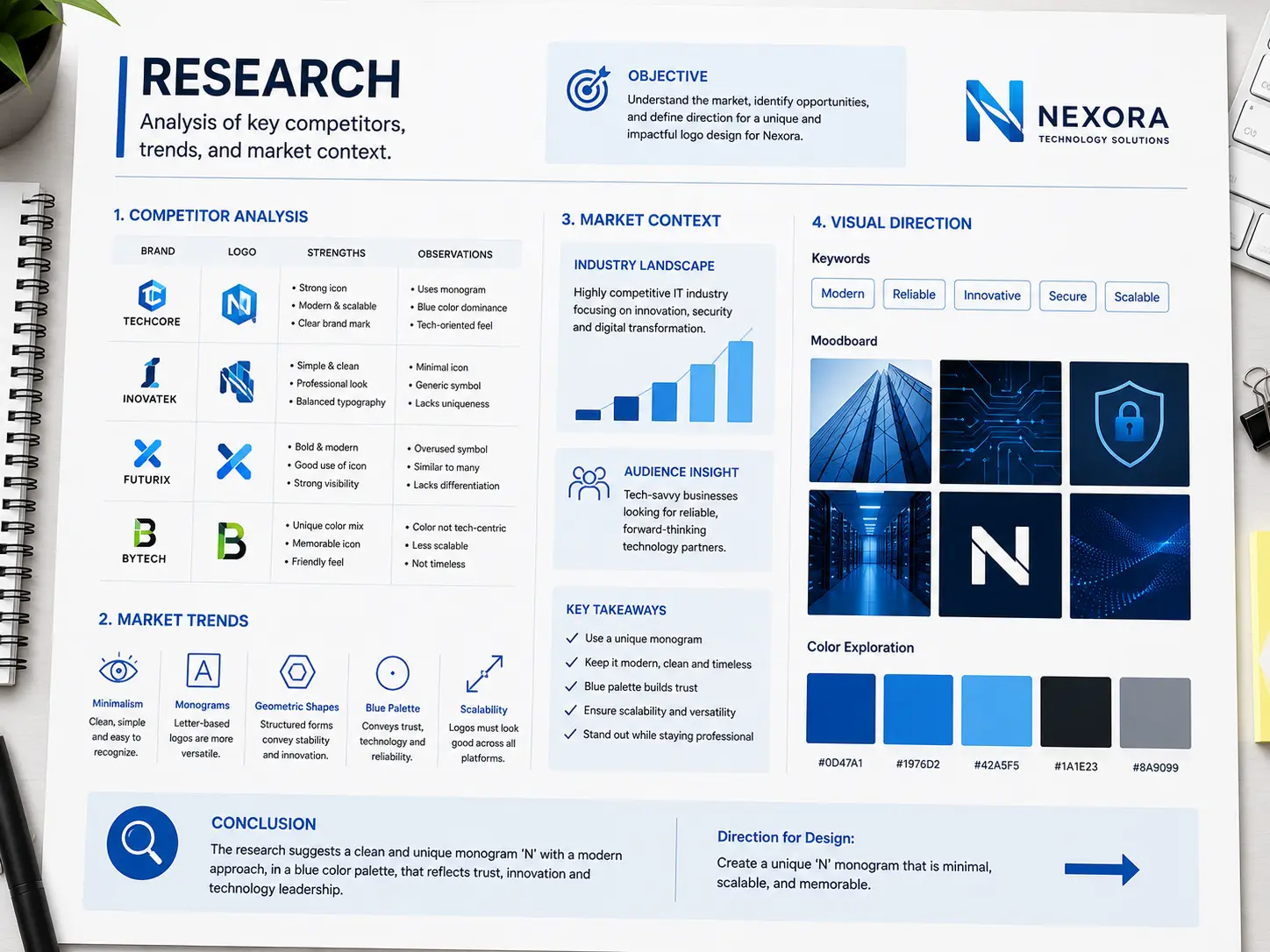
The next step is a complete audit of the industry. Designers research competitors’ logos and industry trends. Now you’ll know what will work for you and what won’t, and, most importantly, how you’ll differentiate your logo from competitors.
| Research | Skip |
| Direct competitors’ logos and brand colors | Logos you personally find beautiful but are in unrelated industries |
| Audience visual preferences and cultural associations | Design awards lists (often optimize for originality, not commercial effectiveness) |
| Trade association and certification mark requirements | Trends that peaked 18 months ago |
Step 3: Concept Development & Sketch Exploration
Sketching on paper is an effective brainstorming tool used for ideation and conceptualization. The goal is to come up with multiple visual directions before committing to one and refining them in digital software. You’ll start to notice what elements you like. You can experiment with symbols, images, and logo fonts until you settle on the one that feels similar to what you have in mind. This step gives your ideas originality.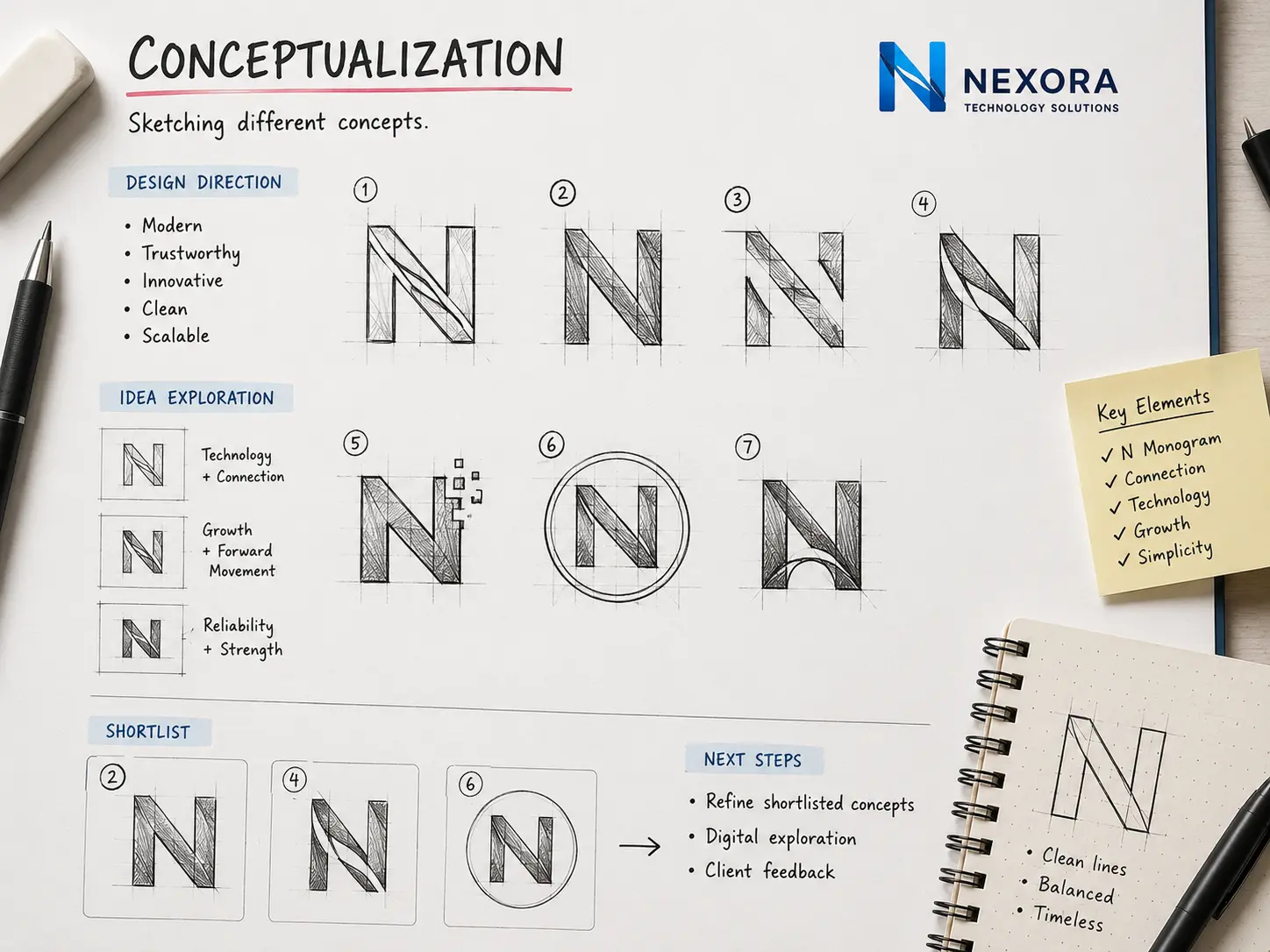
Have a Logo Design Idea in Mind?
We turn vague ideas into logo designs that define your brand.
Discuss Concepts
Have a Logo Design Idea in Mind?
We turn vague ideas into logo designs that define your brand.
Discuss Concepts
Step 4: Digital Design — Vectorizing & Refining Your Best Ideas
Create vector formats of the strongest concepts using Adobe Illustrator or Figma. This step is called the digital refinement. Designers experiment with various logo color combinations and add different elements. Working in a vector format is non-negotiable because it enables scalability. And if you don’t do that right, you’ll compromise quality.
During this step, the designer considers:
- Proportions and visual weight
- Legibility at small sizes (app icon, favicon)
- Monochrome viability (black-and-white logos reveal whether a concept has real structural strength)
- Font selection and custom lettering adjustments
Step 5: Client Presentation & Feedback Round
If the logo is a product, then presentation is its packaging. How a designer presents the concepts is equally important as the concepts themselves. Presenting a concept without highlighting the thought process behind it is a professional failure. Clients might pick the wrong concept without knowing the idea behind it. Each concept should be presented with context. Get feedback not just from your clients but from others as well. See if there’s room for improvement.
A structured presentation should include:
- 2–3 logo concepts shown in context (business cards, digital mockups, signage)
- Written reasoning for each concept’s strategic logic
- Color and typography reasoning
- A clear process for submitting feedback
Step 6: Final Revisions, Color Variants & File Preparation
This is the ultimate refining step in the brand logo design process. Based on the feedback, the designer completes the logo design in its final form.
File preparation checklist:
- Primary logo in full color, on a light background
- Reversed version in white/light on dark background
- Single-color black version
- Single-color white version
- Stacked and horizontal layout variants
- Simplified sub-mark or icon (for favicon and social avatars)
- Color codes must be specified in all four systems: HEX, CMYK, RGB, Pantone
- All file formats: SVG, EPS, PDF, and PNG (transparent background)
Step 7: Delivery, Brand Guidelines & Legal Handoff
The final step in the process of creating a logo is handing off the deliverables. It involves creating a document for complete guidelines and signing the IP agreement.
A complete delivery package includes:
- All logo files (SVG, EPS, PDF, PNG, and all variants)
- Brand guidelines, including color codes, typography, clear space rules, and misuse examples
- Font license or specification for licensed typefaces
- Signed IP/copyright transfer agreement confirming full commercial ownership
How Long Does the Logo Design Process Take?
The logo design process timeline depends on how you choose to create a logo and on its complexity. It’s always about who does it better and faster: AI tools vs freelancers vs company logo design services.
| Option | Typical Time | Best For | Why Choose |
| AI Logo Tools | 5 minutes – 2 hours | Quick ideas and startups | Fastest option with limited originality and customization |
| Freelance Designers | 3 days – 3 weeks | Small businesses and personal brands | Balance of affordability, creativity, and collaboration |
| Branding studios | 2 weeks – 2 months | Established brands and large businesses | Includes strategy, research, revisions, and full brand identity support |
Freelancer vs AI Logo Tool vs Branding Agency: Which Process Actually Delivers?
Almost every business owner has this question in mind. Whatever process you choose entirely depends on your budget, timeline, and need for originality. Here is how AI logo tools, freelancers, and branding agencies stack up against each other.
| Factor | AI Logo Tool | Freelancer | Branding Agency |
| Cost | $0–$99 | $300–$3,000 | $5,000–$50,000+ |
| Turnaround | Minutes | 3–14 days | 3–8 weeks |
| Uniqueness | Low (template-based) | Medium–High | High |
| Strategy included | None | Limited | Full discovery |
| File formats | Basic (PNG/SVG) | Full set if requested | Full set, all variants |
| Legal ownership | License only (usually) | Full transfer with contract | Full transfer |
| Brand guidelines | None | Optional add-on | Included |
Modern design agencies, such as Logo Design Valley, have completely simplified the logo design process, reducing the timeline and the logo design cost. This approach works best for small businesses and newly established startups. They can easily get affordable logo design services from an actual design agency that follows an equally comprehensive process for logo design as a big branding agency would.
When An AI Logo Tool Is Good Enough (And When It Isn’t)
The best AI tools for logo design speed up the ideation process and cut logo design costs. However, most AI-generated logos are generic, lack strategic depth, and are completely unscalable.
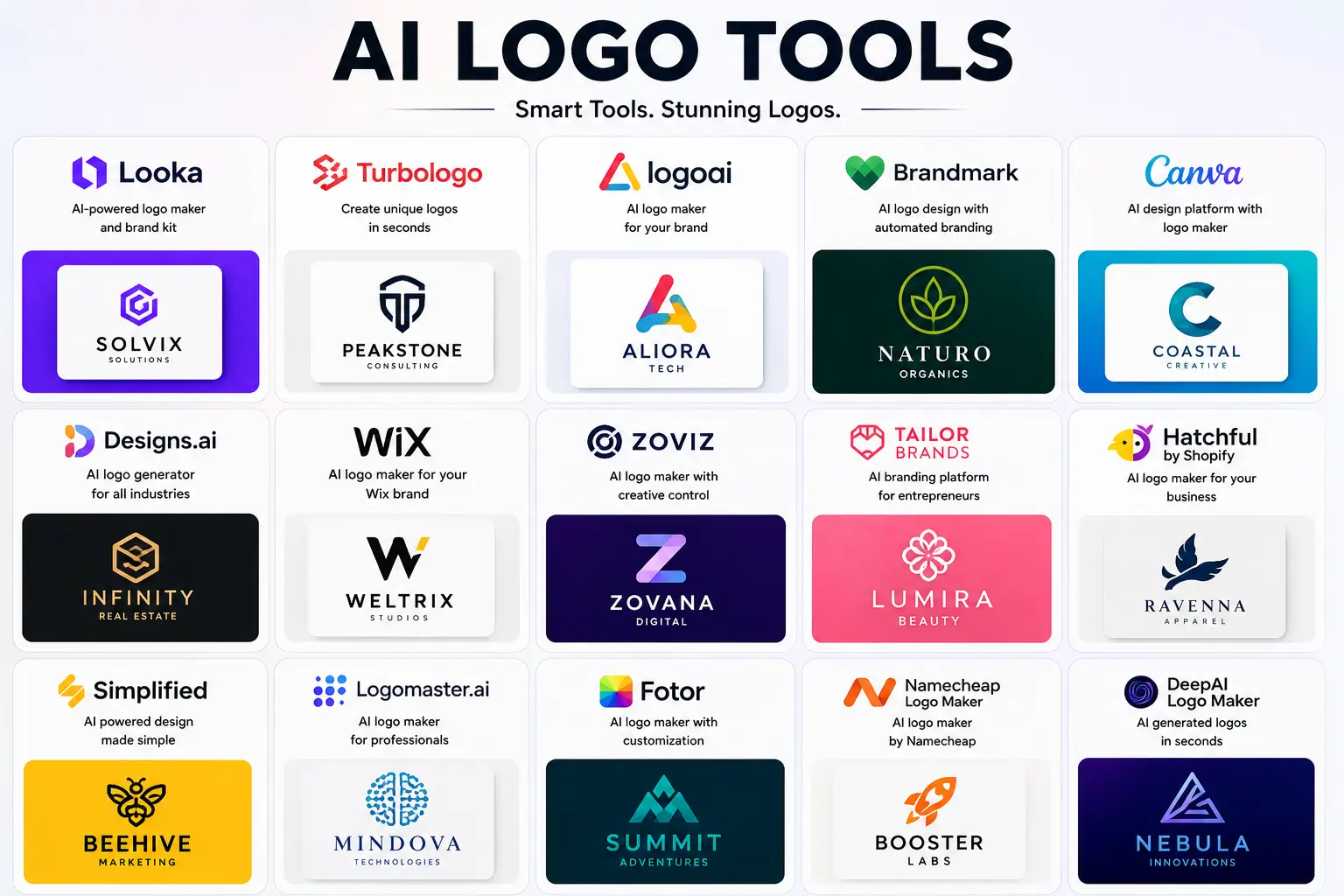
When AI logo tools are good enough:
- You’re low on budget.
- Creating a side hustle, launching a temporary hobby project, or using non-commercially.
- To use as a placeholder.
- AI tools can generate multiple ideas in different color combinations and styles. They work on brainstorming and mood boards.
- AI-generated logos work for a digital avatar on a forum or a small local blog.
When an AI tool is not appropriate:
- You want to build a serious business that stands out.
- You need scalable files in different file formats.
- If you plan to trademark or copyright your logo, AI logo tools might not be the best option for logo creation.
- Planning to pitch your business to investors.
What To Ask Before Hiring A Freelancer For Your Logo Design Process
Freelancers are an affordable option for small businesses. However, they sometimes lack quality in their work. When you’re about to hire a freelancer, make sure you ask them these questions about the logo design process and final deliverables.
- What is your logo design process?
- Can you share 3 logos you’ve previously made for your clients?
- How many revision rounds are included in your quote?
- What happens if I do not like the initial concepts?
- Will I receive full commercial ownership of all the files and brand guidelines?
- What file formats are included in the final deliverables?
- Do you provide a brand usage guide?
Logo Design Process for Startups: What You Actually Need (on a Real Budget)
Your startup logo is not just a “logo.” Most first-time founders and seed-stage startups treat logo design as an afterthought. They do not acknowledge that the logo is, in fact, one of the first things they need to launch their brands. If you’re looking for investors, but your budget is low, here’s what you actually need to know to design a company logo:
| Budget Tier | Recommended Route | What to Prioritize |
| Under $150 | AI tool + manual customization | Unique color palette, one strong typeface |
| $150–$500 | Freelancer (mid-level) via Upwork | Full file package, IP transfer, at least 2 concepts |
| $129+, flexible quotes | Modern logo design agency with scalable custom pricing | Custom concepts, revision flexibility, brand-ready files, affordable long-term support |
| $500–$2,000 | Senior freelancer or small studio | Brand guidelines, all variants, font specs |
| $2,000+ | Boutique studio or senior brand designer | Full identity system, pitch deck templates, social kit |
The $129 Budget: What’s Realistic and What to Prioritize
Most modern logo design and branding agencies in 2026 offer custom logo designs starting at $129, with rates gradually increasing with the scope of work and requirements. This pricing is ideal for any first-time founder or startup with a limited branding budget. The idea is to deliver enterprise-agency quality at affordable prices. Here’s what to expect for a custom logo design at $129:
- Primary logo in all file formats
- At least 3 logo design concepts
- An expert logo designer
- At least 2 rounds of revision
- Initial concepts delivered within 36 hours
Get Investor-Ready Branding Without Agency Prices
Investor-ready does not have to mean expensive. We create strategic, clean, and confident logo designs at ideal prices for startups.
Get Your Logo
Rebranding? When to Revisit Your Logo Design Process Without Confusing Customers
Rebranding is not about building from scratch again. It’s an evolution. It’s the only way to modernize your visual identity without confusing existing customers. But you have to do it right. One small misstep can change your positioning entirely.
Signs Your Current Logo Is Hurting Brand Consistency
- The logo does not work across different branding and marketing mediums.
- Your logo design is not available in vector format, so when you use it, it pixelates or blurs.
- The logo works only on a white background and loses its essence on other backgrounds.
- It looks outdated or relies on shadow effects to be visible.
- Your color palette is not unified for use across campaigns and departments.
- The logo has started to blend in with competitors.
- Your audience or business has expanded.
- Customers say your brand looks dated.
How To Transition A Rebrand Across Web, Print & Social Without Alienating Existing Customers
Here are some tips for a successful transition:
- Update your design in stages, starting with the logo and then moving toward colors and fonts.
- Gradually update your rebranded identity across the website, social profiles, and email signatures before committing to print reprints.
- Announce your rebranding with a social media post or banner that says something like “we’ve updated our look.” Explain why the change is happening and how it’ll benefit them.
- Do not change design elements that make you recognizable. Leave some small details of the existing brand.
- Stay true to your founding principles, brand values, and mission.
7 Biggest Mistakes in the Logo Design Process (and How to Avoid Each One)
Some of the most common logo design mistakes designers make during the process of creating a logo are:
Starting without a brief Jumping into design before documenting the brand personality, audience, and competitor context results in generic output.
Fix: Spend 30 minutes completing a structured design brief before any visual work begins.
Designing only in full color A logo that only works in full color will fail on embossed packaging, single-color signage, and black-and-white print.
Fix: Test every concept in monochrome before approving it.
Choosing the wrong file format Accepting only a PNG from your designer means every future use is a compromise.
Fix: always request SVG and EPS as part of your delivery package.
Skipping the IP transfer agreement Without a signed copyright transfer contract, your designer technically owns the logo.
Fix: Include a standard IP assignment clause in every design contract before work begins.
Not specifying revision rounds upfront Open-ended revision commitments lead to scope creep and resentment on both sides.
Fix: Agree on the number of rounds and what constitutes a revision in writing before the project starts.
Evaluating concepts without context Judging a logo as a flat image on a white screen is not an evaluation. It is a guess.
Fix: Request all concepts presented in realistic mockups (business card, app icon, signage).
Not getting a second opinion Your logo might be lacking connection, or some design elements might not be up to the mark.
Fix: Get another designer or someone random to give an opinion on the logo. See if they connect it to the brand.
What Should Your Logo Design Package Include? The Complete Deliverables Checklist
Before signing off on any logo design project, make sure the following deliverables and logo file formats are included in the package:
Main Variations of the Logo
- Primary logo: Your main logo.
- Secondary Logo: An alternate layout of your primary logo.
- Submark: Simplified version, initials only, or the icon
- Watermark: Transparent or light version of the logo.
- Stacked and horizontal layout variations: Different aspect ratio requirements.
- Favicon: 32×32 pixel version of the main logo for display on the browser tab.
File Formats You’ll Need
| Format | Use Case | Notes |
| SVG | Web, digital, scalable | Preferred for web; scales to any size |
| EPS | Print, professional design software | Required for sign-makers and print vendors |
| Print-ready sharing | High-resolution, universally compatible | |
| PNG (transparent) | Digital use, overlays, presentations | Must have a transparent background |
What Should Your Brand Guidelines Document Include
| Basic (1–2 pages) | Full (8–20+ pages) |
| Primary and secondary logo usage | All of the basic items plus: |
| Color codes (HEX, RGB, CMYK, Pantone) | Logo misuse examples |
| Primary and secondary typefaces | Photography and imagery style |
| Clear space/exclusion zone rules | Iconography and illustration style |
| Background usage (light vs dark) | Social media asset specifications |
| Print and signage specifications |
The Power of a Logo Design Process
A weak logo design process will result in a weak logo and an even weaker branding. As someone new in the industry, you’d want to avoid that. Whether you use an AI tool, hire a freelancer, or partner with a professional logo design company, the whole process shapes the end result.
Modern design agencies like Logo Design Valley prove that the logo design process does not have to be lengthy and expensive to deliver quality work. For startups, this approach is ideal.
Pro Tip: Always ask about the logo design process before you onboard a design agency or a logo designer.
Author Bio

 verified expert
Duaa writes blogs about marketing, branding, web design, and logo design. She enjoys turning ideas into simple, engaging content that helps businesses build stronger brands and connect with their audience in a more meaningful way.
Still choosing the right logo design company?
Get a quick, expert review. No pitch, just clarity on what fits your stage, budget, and growth.