Your logo is the face of your brand. It’s the first thing people see about your business, even before you say a word or interact with them. Most first-time founders either overspend on an agency that takes weeks to deliver the logo, or they cut costs and use AI logo generators for generic results. The real problems arise when a logo isn’t created according to the best practices for logo design.
The difference is clearly in the design process. A logo that actually follows logo design principles will be a core component of your brand identity. On the other hand, a logo that needs to be redesigned every few months has a weak design process and lacks conceptualization, research, and scalability.
This guide discusses how you can follow the best practices for logo design to create simple, memorable, appropriate, and unique designs that are adaptable to your growth as a startup. 
Why Following the Best Practices for Logo Design Matters in Modern Branding
Modern branding is not completely about decorative visuals. The approach today leans more toward building strategic design systems that support recognition and growth. A logo is an essential element in the strategic design system. Without it, your brand has no face, or an instant medium that makes your business look approachable. To create a logo that aligns best with your long-term branding goals and business scalability plans, your design must follow the basic principles.
Role of Logos in Brand Identity & Recognition
A logo may just be symbols, colors, and typography, but there’s more to it. It is the visual ambassador for your brand, it makes your business instantly recognizable, and conveys your story in the first few seconds. Your logo appears on your website, in mobile apps, on social media, on business cards, on packaging, and on signage. A strong logo is a visual asset for any brand, as most marketers would say. When a designer follows the best practices for logo design, it can do wonders for your brand identity.
- Your customers choose you over any competitor instantly.
- A unique logo leaves an impression on consumers’ minds.
- It makes your business credible and trustworthy.
- Creates familiarity across platforms.
- Connects consumers with your brand emotionally and strengthens recall.
Why Poor Logo Design Increases Long-Term Costs
It’ll cost more to redesign a logo than to do it right the first time! A common mistake most startups and first-time founders make is investing in low-cost logo designs or generating one with AI tools. What they don’t understand is that they are harming their own brand image. Thinking of your logo as an extra is one of the most common logo design mistakes to avoid as a business that’s just starting out in the industry.
When logo designs lack artistic skill, strategic thinking, and the fundamental design principles, you’ll be forced to rebrand as your business scales. You’ll have to fix your website, update the logo on your socials, and redesign your signage. Rebranding costs 3x as much as doing it right the first time. Poor designs will cost you more. They’ll become outdated at some point. You’ll struggle to stand out in the industry because you thought a generic design would be good enough. In the end, you’ll have to rethink your design, so why not just do it before?
Skip rethinking your logo design with LDV!
We create custom logo designs for your brand that do not need to be redesigned every few months.
Design a LogoBest Practices for Logo Design To Make It Effective
All over the world, designers follow the same logo design principles. Whether you’re a small fintech startup, a growing ecommerce SMB, or an established SaaS company, these best practices for logo design will work for you. 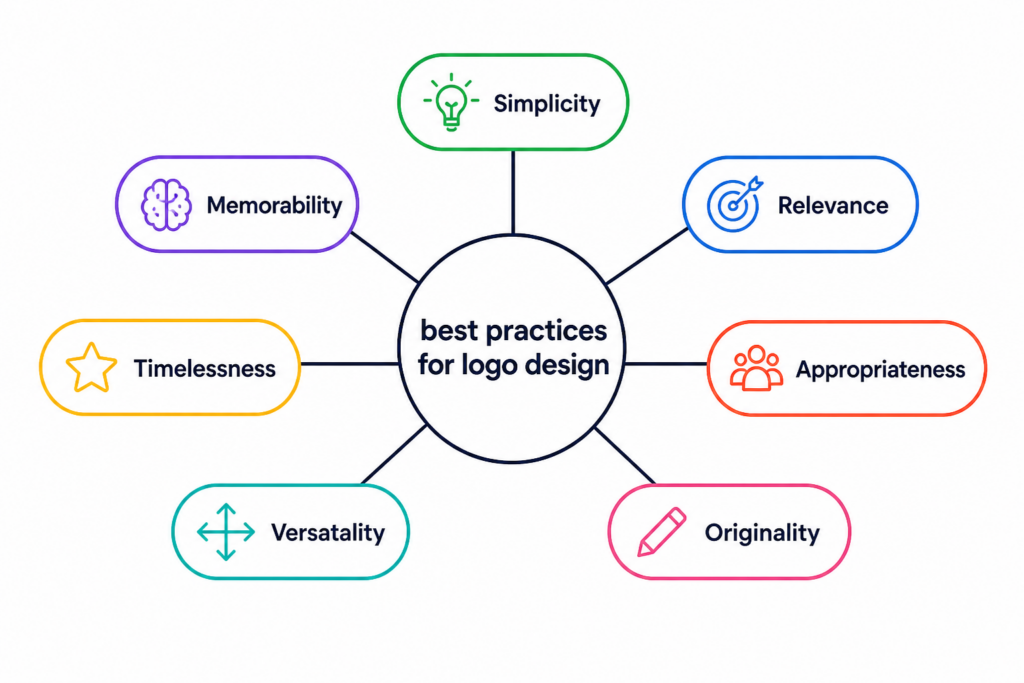
1. Simplicity and Memorability
You need to keep your logo as simple as possible. Complex logos are at risk of becoming outdated. Minimalist logo ideas are no longer a trend. Think of the most iconic designs. Nike. McDonald’s. Apple. One thing they all share in common is simplicity.
When your design is simple, it strengthens brand recall (that’s what just happened when you read the names of these iconic brands). The human brain encodes simple shapes and stores them longer in the memory. Simplicity and minimalism make your logo reproducible from memory.
2. Versatility and Scalability for Platforms
Versatility means your logo works everywhere. When you’re designing it, think about all the places it’ll show up. It’s going to go up on your website, packaging, social media, and the list goes on.
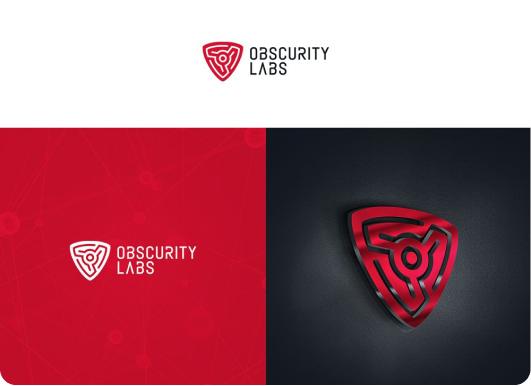
Will your logo work on different screens? How would it look in print? Does the color pixelate when the size changes? Is it still recognizable in black-and-white? In our opinion, one of the best practices for scalable logo design across platforms is to create mockups. If it’s not working, make the necessary changes.
3. Relevance and Brand Alignment
When you follow logo design best practices, you’ll immediately see the groundwork leading to brand alignment. Your logo will embody your core values, principles, and brand story. It needs to reflect your brand’s personality, industry, and audience.
A quirky font would go best with a children’s brand. If you use it for a fintech company or a law firm, it will not work. Think about your target audience. Is your logo relatable to them? Does it tell your consumer about who you are or what you do? Using symbolism or subtle imagery gives your consumers something to relate to build an emotional connection.
4. Color Psychology and Typography
Color and typography are two of the most essential elements of a logo design. They need to be thoughtfully considered when creating a brand identity. Every color has a different meaning. Black means luxury and authority. Green suggests growth and wellness. Blue is mostly used by banks and fintech companies because it signals trust. Red conveys energy and urgency. Incorporating color psychology is a smart logo practice.
For more inspo, see Logo Design Valley’s article on the best logo color combination ideas. Typography carries equal weight. Serif fonts show tradition and reliability. Sans-serif fonts feel modern and clean. Script fonts add elegance or creativity, but you need to make sure they work well even when the size changes. Start designing your logo in black-and-white. If it works in it, it’ll work in any color palette.
5. Originality and Trademark Safety
Your logo design needs to be unique. Originality is one of logo design best practices that can completely change your position in the industry. Generic designs can compromise trademark safety, especially if you plan to register your brand. Aim for a timeless design that remains relevant for a long time.
Step-by-Step Logo Design Process Based on the Best Practices
To tell if a logo design company is legit, you need to assess its logo design process. Logo Design Valley follows an extensive design process to ensure every logo delivered is ready to scale. Based on the professional logo design best practices, here’s a step-by-step process most designers follow:
Research, Competitor Analysis, and Ideation
David Airey‘s first golden rule for logo design is to “lay the groundwork”. Every logo design project comes with a different set of challenges. Each person has a different mindset, even if they belong to the same profession. Knowing the client and their product or service is one of the best practices for logo design. Start your work with complete research. Analyze at least 5 competitors to get an idea of what shapes, typography, colors, and visual patterns they’ve used. Then think about what will make your design stand out, and the logo design mistakes to avoid. One effective approach is to create a mood board of all your ideas for your logo.
Sketching and Concept Development
Skip the design software and sketch your logo. Sketching your thoughts on paper is easier than getting straight to designing. You can experiment with the placement of elements and visualize the result without any distractions. Develop as many rough concepts as you can. Select the best and refine them for the final logo design.
Digital Design and Refinement
Move your best concepts to a design software like Adobe Illustrator or Figma. Work in vector format from the start to ensure scalability across platforms. Refine each element as you go and maintain a balanced layout. Make sure no single element overshadows the others. They should all come together in harmony and convey a single message about the brand.
Testing Across Different Platforms
Your logo isn’t used alone. It’s a part of your website, mobile app, poster, or you might even need it for a banner. Consider your broader brand identity. Does your logo work across all use cases? How will the logo appear to potential customers? Test your logo design across various platforms to ensure it is versatile and adaptable to changes. This step helps you avoid expensive revisions. It is one of the responsive logo design best practices to make sure a Saas, ecommerce, or fintech logo appears the same across all digital and print touchpoints.
Final Delivery and Brand Guidelines
Before the final delivery, always get a second opinion on the design. It’s among the best practices for logo design improvement. A professional and complete delivery of the logo includes a complete file package, a mini brand guideline, and a list of technical specifications for the required file formats. A brand guide covers logo design usage, color codes, typography, and clear-space requirements. Complete deliverables ensure inconsistency isn’t a problem as the business grows. 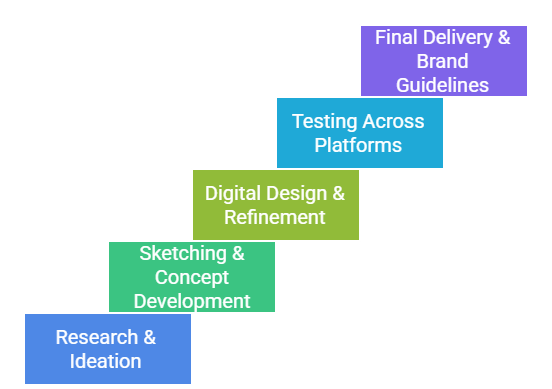
How AI Tools Have Influenced Logo Design Practices
AI has had a significant influence on traditional logo design practices. Let’s break down what difference AI makes:
When AI Works Best in Logo Design
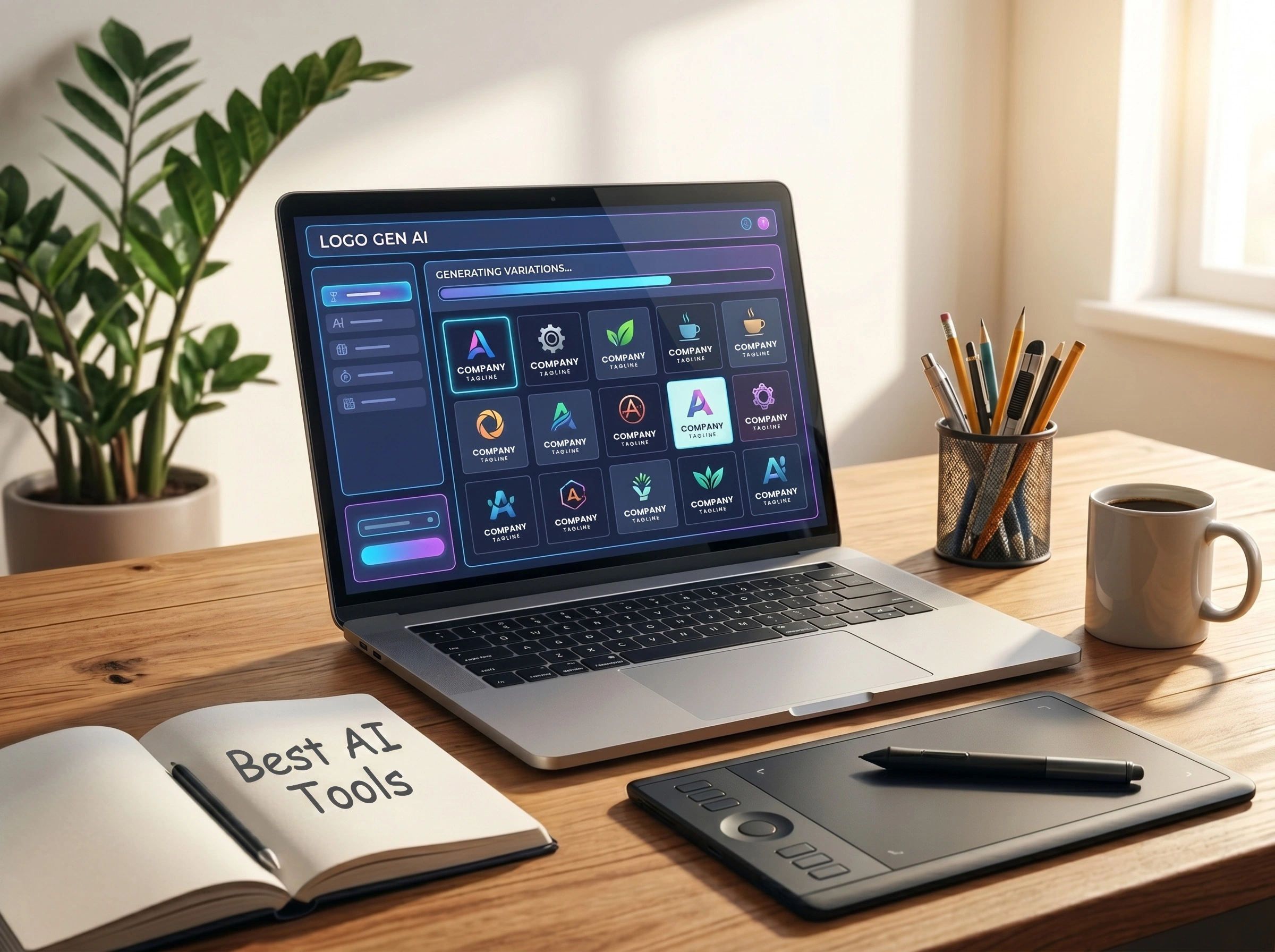
Using the best AI tools for logo design dramatically accelerates the ideation process. For a founder who wants 50 inspos by afternoon, AI is a useful tool. It can help with generating color combinations, typography pairings, and rough icon concepts. AI tools also significantly reduce the total time it takes to design a logo. But AI-generated logo designs will always need a human touch to add an emotional aspect to the final product.
Limitations of AI in Branding
- AI lacks creativity, emotional intelligence, and strategic thinking to align with market positioning.
- AI-generated outputs don’t meet the professional print standards.
- It cannot conduct trademark clearance.
- Logos lack uniqueness. Most designs are generic and resemble existing ones.
Hybrid Approach (AI + Human Designers)
AI tools can assist human designers in refining their designs and set a strong foundation with ideas.
| Stage | AI Role | Human Designer Role |
| Ideation | Generate 50+ concepts quickly | Curate, direct, and brief the AI |
| Strategy | Not applicable | Brand research, competitor analysis, positioning |
| Execution | Draft visual directions | Refine vectors, kerning, proportions |
| Delivery | Export files | Trademark check, brand guidelines, file package |
The best practices for logo design today follow this approach:
- Use AI for speed to generate ideas in the first stage.
- Combine human expertise for strategy, legal compliance, refinement, and final delivery.
Common Logo Design Mistakes to Avoid as a Beginner
These logo design mistakes can be expensive to reverse. Here’s what to avoid as a beginner:
- Do not overcomplicate the design. Too many elements can make your design chaotic. The end result wouldn’t be what you thought of. On the other hand, generic designs will fail to differentiate you.
- One of the useful logo design tips for beginners, in our opinion, is to never ignore scalability. Make sure your logo is adaptable to all sizes and formats.
- Using too many colors or choosing trendy fonts over timeless ones will make your logo outdated and cluttered. Intentionally choose the colors and typography for the best outcomes.
- Business markets like Dallas or New York are full of competition. Tweaking logos slightly might cause penalties from competitors. Carefully consider trademark safety in logo design before you launch it.
Conclusion
The best practices for logo design are clear guidelines and standards to make the perfect logo. For most startups or SMBs, it’s important that they invest in a logo that follows a comprehensive process and aligns with design principles. The damage a poor logo can do to your brand identity is irreversible. Before you finalize your logo design, ask yourself the following:
- Is the logo simple?
- Will my target audience remember it?
- Does it perform well across different platforms?
- Is it adaptable to different screen sizes and printing demands?
- Is it an original design?
If the answer to all these questions is yes, your logo design is ready to use.
Ready to design a logo?
We follow the best practices to create timeless logo designs for your brand.
Consult an ExpertAuthor Bio

 verified expert
Duaa writes blogs about marketing, branding, web design, and logo design. She enjoys turning ideas into simple, engaging content that helps businesses build stronger brands and connect with their audience in a more meaningful way.
Still choosing the right logo design company?
Get a quick, expert review. No pitch, just clarity on what fits your stage, budget, and growth.