When you’re a small business owner, you often ignore the need for good web design. Months later, your business starts failing. There are no customers converting, and losses exceed your original investment. That’s when you realize the problem is not your product. It is your poor web design that makes it hard for users to navigate.
Next time you think about why is web design important, remember this. It’s important because it creates the first impression of your brand and plays a critical role in your website’s overall success. With that said, let’s dive into why web design is important and how you can make it an effective tool for your business success.
Why Is Web Design Important in Making the First Impression?
One of the major factors in evaluating a website’s credibility is its web design. Research by the Stanford Persuasive Technology Lab suggests that 46.1 percent of visitors judge a website’s design first to determine a business’s credibility. All of that happens in 0.05 seconds.
2- 46.1% of people judge a website’s credibility by its web design.
3- 94% of people would reject your website because of the design,
4- 38% of people leave the website if they don’t find the layout/content attractive.
For small businesses, these aren’t just statistics. They are the reason why is web design important. You don’t have the budget of a Fortune 500 company to fall back on. Your web design is the first sign of your website credibility.
What Users Judge in the First 3 Seconds
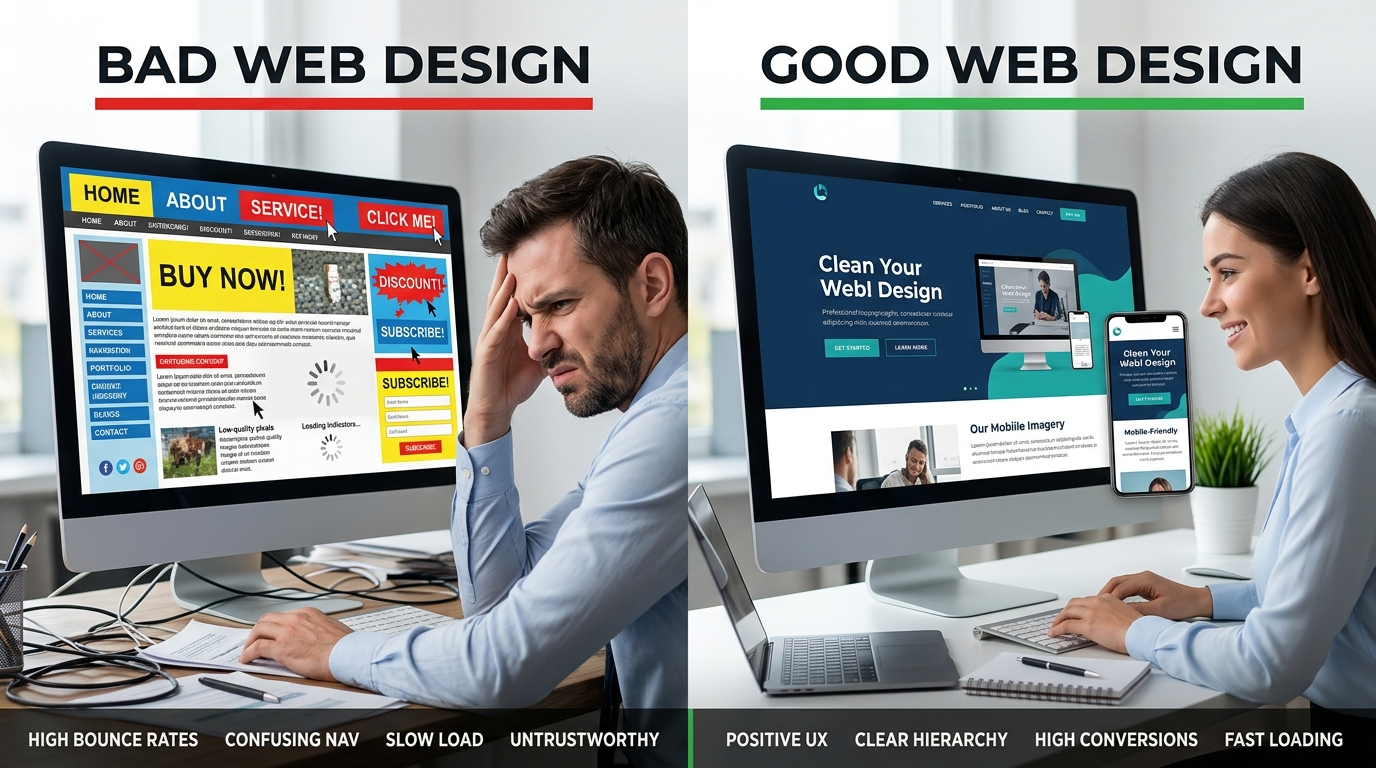
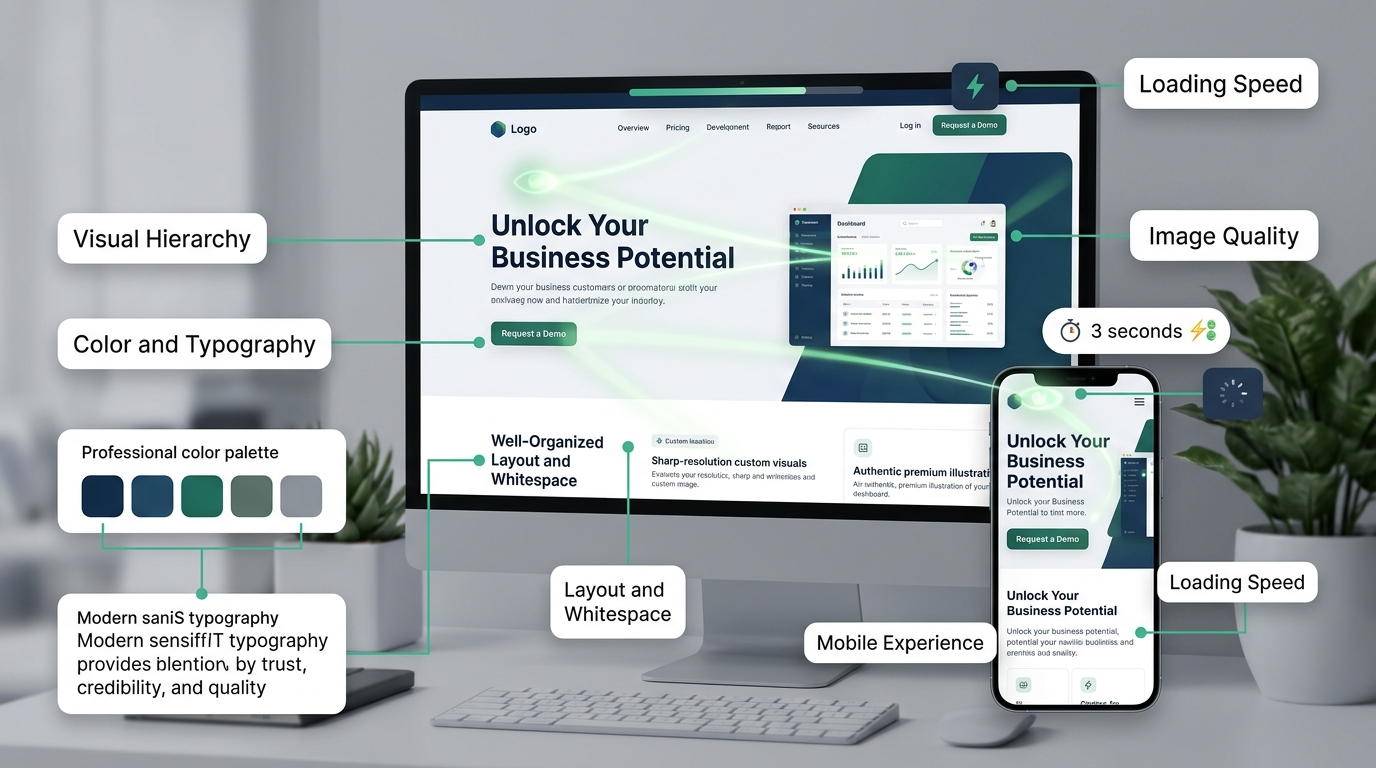
Your website isn’t all about just looking pretty. Your users are making lightning-fast assessments about your web design:
Visual Hierarchy: Does your web design make it clear what your business is about?
Color and Typography: Do the colors and fonts used make your website professional, trustworthy, or cheap?
Layout and Whitespace: Is the page cluttered or calm and organized?
Image Quality: Are the images sharp or blurred? Have they used stock images?
Mobile Experience: Does it load properly on a smartphone?
Loading Speed: Does anything appear under 3 seconds?
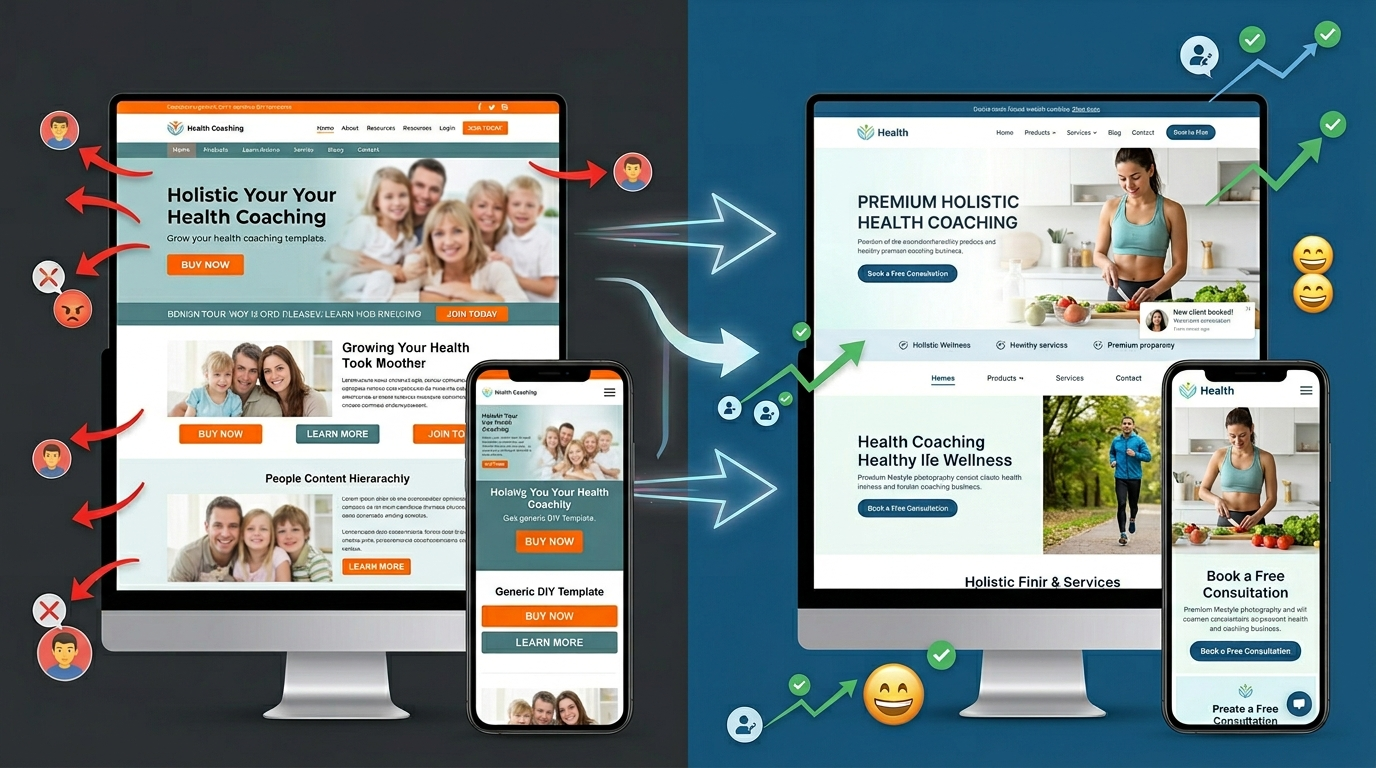
Two Websites, Same Product, Different Results
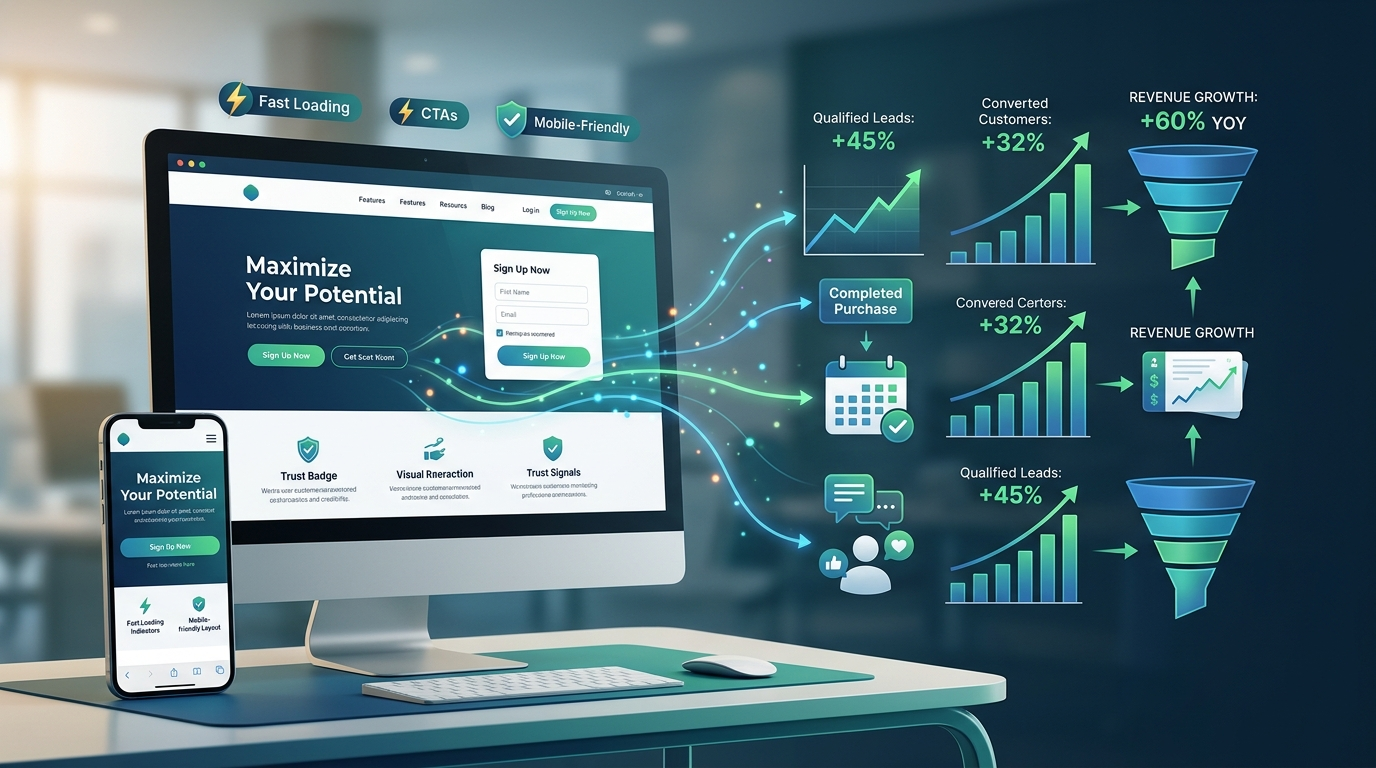
How Web Design Directly Affects Your Revenue and Conversions
Your website is a financial decision. It impacts the bottom line of your business success. A professional web presence is a reason why visitors convert, engage, and retain, leading to increased ROI and brand loyalty. To make it easy for you, here’s a table:
| Metric | Poor Design | Professional Design |
| Monthly website visitors | 1,000 | 1,000 |
| Conversion rate | 0.5% | 2.5% |
| Leads per month | 5 | 25 |
| Average client value | $500 | $500 |
| Monthly revenue impact | $2,500 | $12,500 |
| Annual difference | — | +$120,000 |
The $1,299 investment for a custom web design starts looking a lot different when you do the math. The question isn’t whether you can afford the professional web development cost. It is whether you cannot afford to have one.
Why Load Speed and Mobile Design Aren’t Optional Anymore
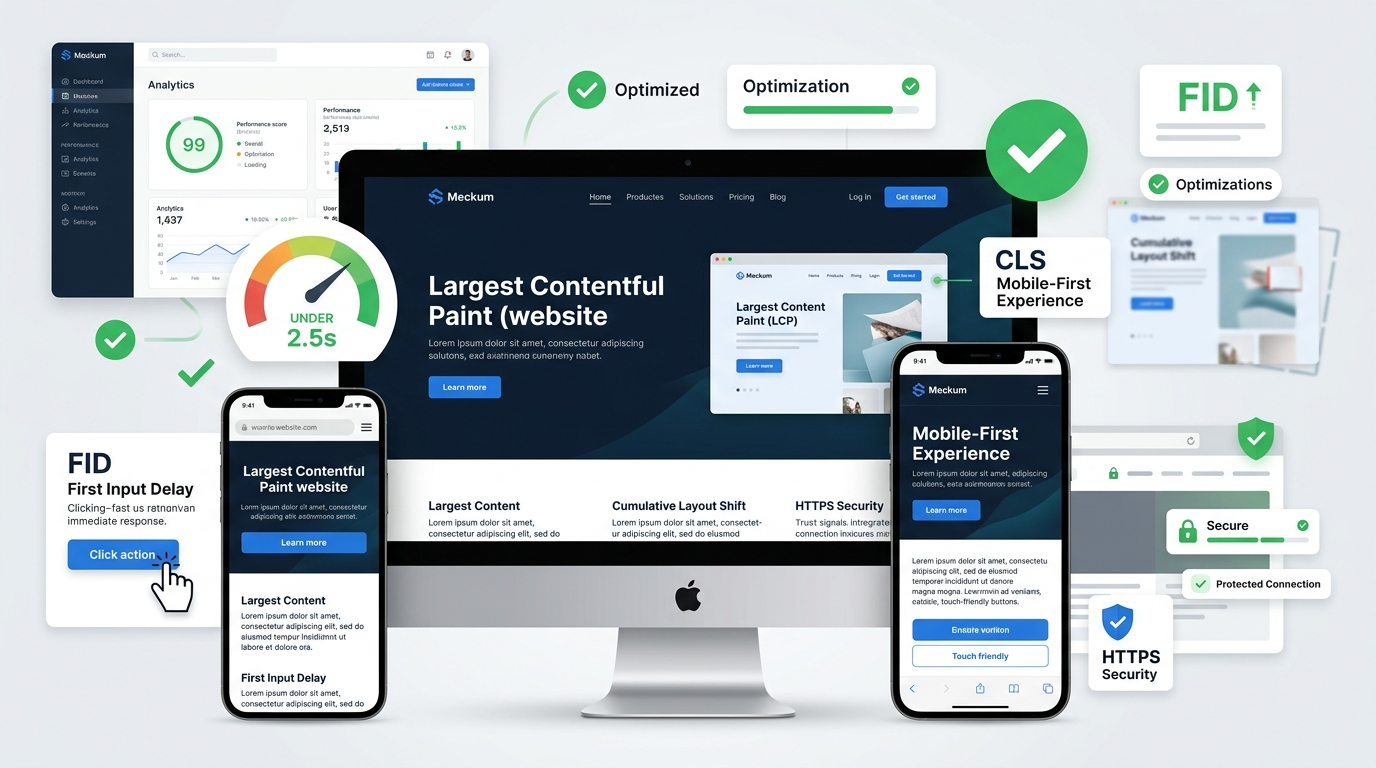
Core Web Vitals are Google’s criteria for website ranking factors. This set of website performance metrics measures load speed, visual stability, and responsiveness. They determine why Google loves a website, and when the website should be penalized for frustrating a visitor.
Smartphones drive over 60% of web traffic. Google now crawls your web design for mobile indexing first. If your mobile experience is broken, there’s a high chance that your rankings will suffer across the board.
Does Your Website Pass the Design Test?
1- LCP (Largest Contentful Paint): Your main content loads in under 2.5 seconds
2- FID (First Input Delay): Your site responds to user clicks in under 100ms
3- CLS (Cumulative Layout Shift): Page elements don’t jump around as they load
4- Mobile-first: Your site looks and functions perfectly on a 375px screen
5- HTTPS: Your site is secure (Google flags non-secure sites in search results)
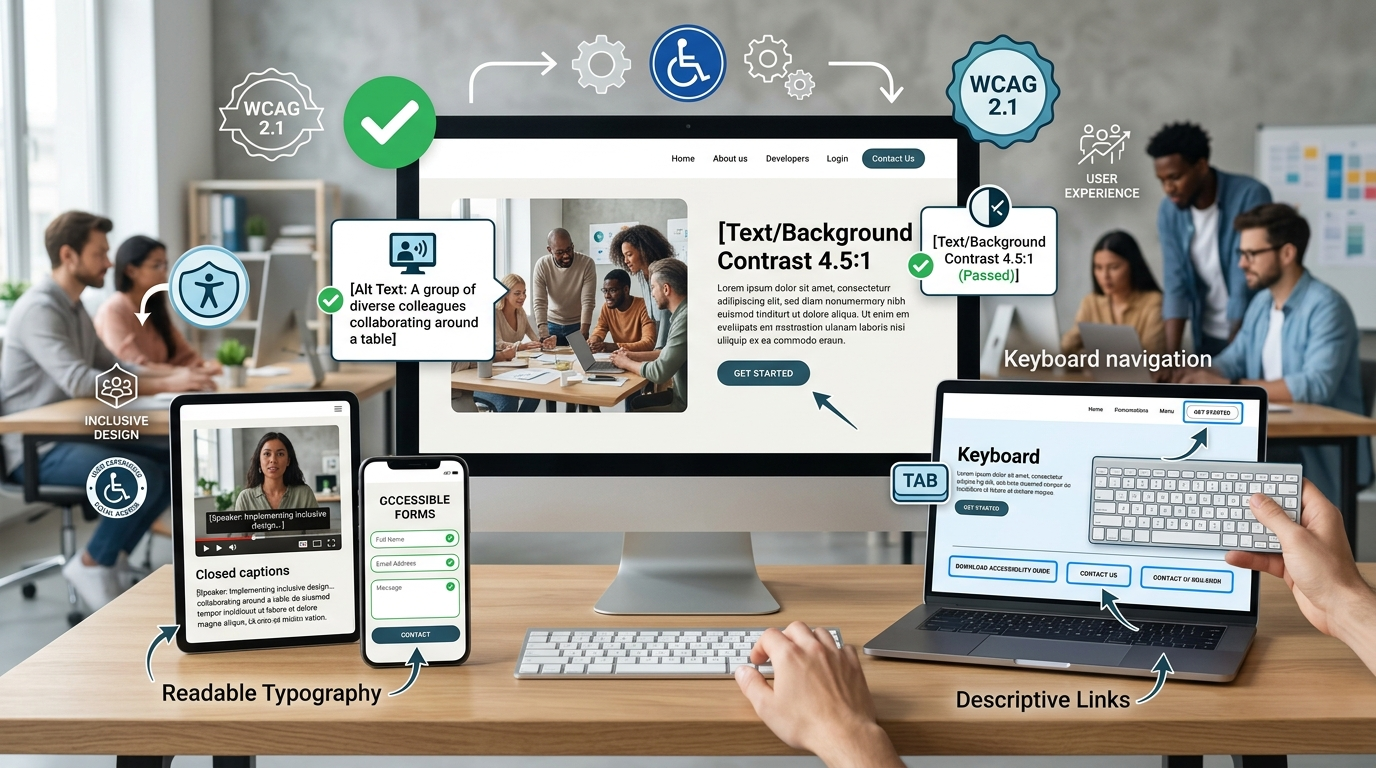
How Important is Accessibility in Web Design
Accessibility in web design means building websites for everyone. This includes people with visual impairments, motor difficulties, hearing loss, or cognitive disabilities. Not many websites address the core issue of how important is accessibility in web design.
A web design with inclusivity of the disabled expands your audience. Accessible web design is also key to improving SEO. Good accessibility reinforces good SEO. Businesses that fail to meet basic accessibility standards face real legal exposure.
The WCAG 2.1 (Web Content Accessibility Guidelines) is now the industry standard for compliance.
1- Alt text on all images so screen readers can describe them
2- Sufficient color contrast between text and background (minimum 4.5:1 ratio)
3- Keyboard navigability: all functions accessible without a mouse
4- Descriptive link text: no ‘click here’ or ‘read more’ without context
5- Captions on all embedded video content
6- Forms with properly labeled input fields
7- Font sizes no smaller than 16px for body text
Which is Better: DIY Website Builders vs. Professional Web Design
Platforms like Wix, Squarespace, and Webflow have their place in the web design community. They’ll help you get online quickly on a very affordable budget. But when you’re a business with scaling plans, you’ll hit a ceiling sooner than you expected.
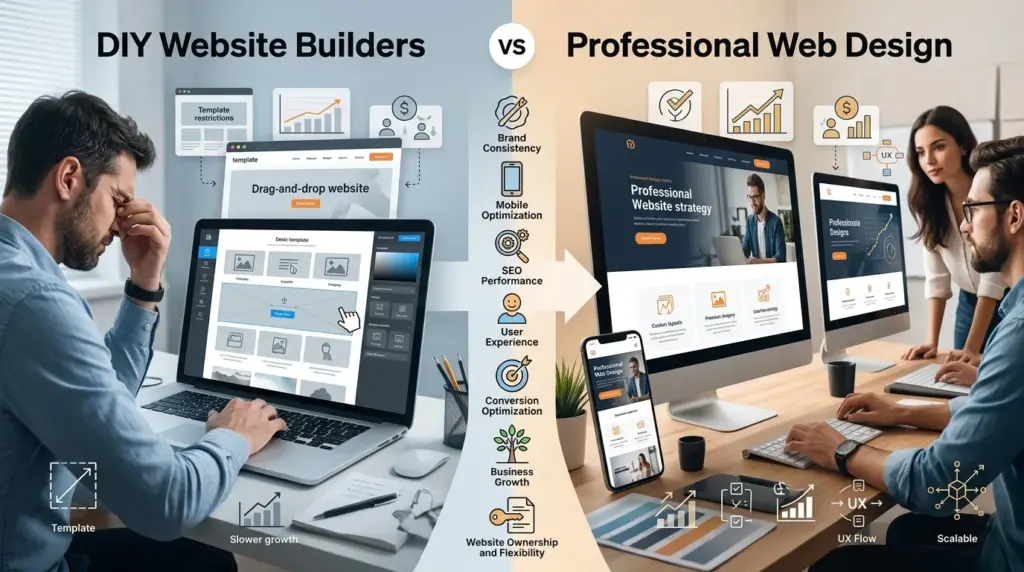
Here’s a side-by-side comparison table to decide for yourself.
| Factor | DIY Builders (Wix, Squarespace) | Professional Web Designer |
| Setup Time | Hours to days | 1–4 weeks (strategy-driven) |
| One-Time Cost | $0–$50/month + your time | $999–$1,699 (you own it fully) |
| Design Customization | Template-limited | Fully custom to your brand |
| SEO Foundation | Basic / auto-generated | Structured, schema-tagged, optimized |
| Brand Consistency | Generic look | Aligned with logo, colors, fonts |
| Conversion Rate | Lower (generic UX patterns) | Higher (user-intent driven layouts) |
| Code Ownership | Platform-locked | You own all files |
| Scalability | Limited by template | Built to grow with your business |
| Mobile Optimization | Responsive, but template-based | Custom, Core Web Vitals optimized |
| Best For | Pre-launch / MVP concept testing | Growth, rebrands, investor-ready presence |
The untold truth about the “free” website builders is that there’s no doubt they get the job done well. But you don’t own the designs, customization is limited, and sometimes they lack SEO depth. If you ask a professional web design agency, which would be a better option, we’re team “professional web designer”!
When a DIY Tool Is Good Enough, And When It’s Not
A DIY tool makes sense when:
- You need an online platform for your business within 48 hours.
- Your budget is less than $500.
- You are still in your developmental/MVP phase.
- Your messaging is evolving.
- You are experimenting with your text and structure.
- You have one landing page and a call-to-action.
A DIY tool will cost you when:
- Your website’s bounce rate is more than 60%, and page loading takes time.
- You have been told your website is “hard to navigate”, and you need to optimize user experience with a website navigation design.
- Your logo design and branding do not match the theme of your website.
- You’re preparing for investor meetings and product launches.
What a Professional Designer Brings That DIY Tools Can’t
Working with a professional web designer is the best thing you’ll do for your business growth. Drag-and-drop elements lack strategic thinking, technical functionalities, and custom refinements.
Hiring an expert brings technical expertise, deep design sense, and unified presence to your project. They understand the visual hierarchy, color psychology, and how button placements affect conversion rates. They build with brand guidelines in mind, not templates.
Also, from the perspective of owning your website, a web designer gives you complete commercial ownership of the design. There are no monthly platform fees. And definitely no losing your site when you cancel your subscription.
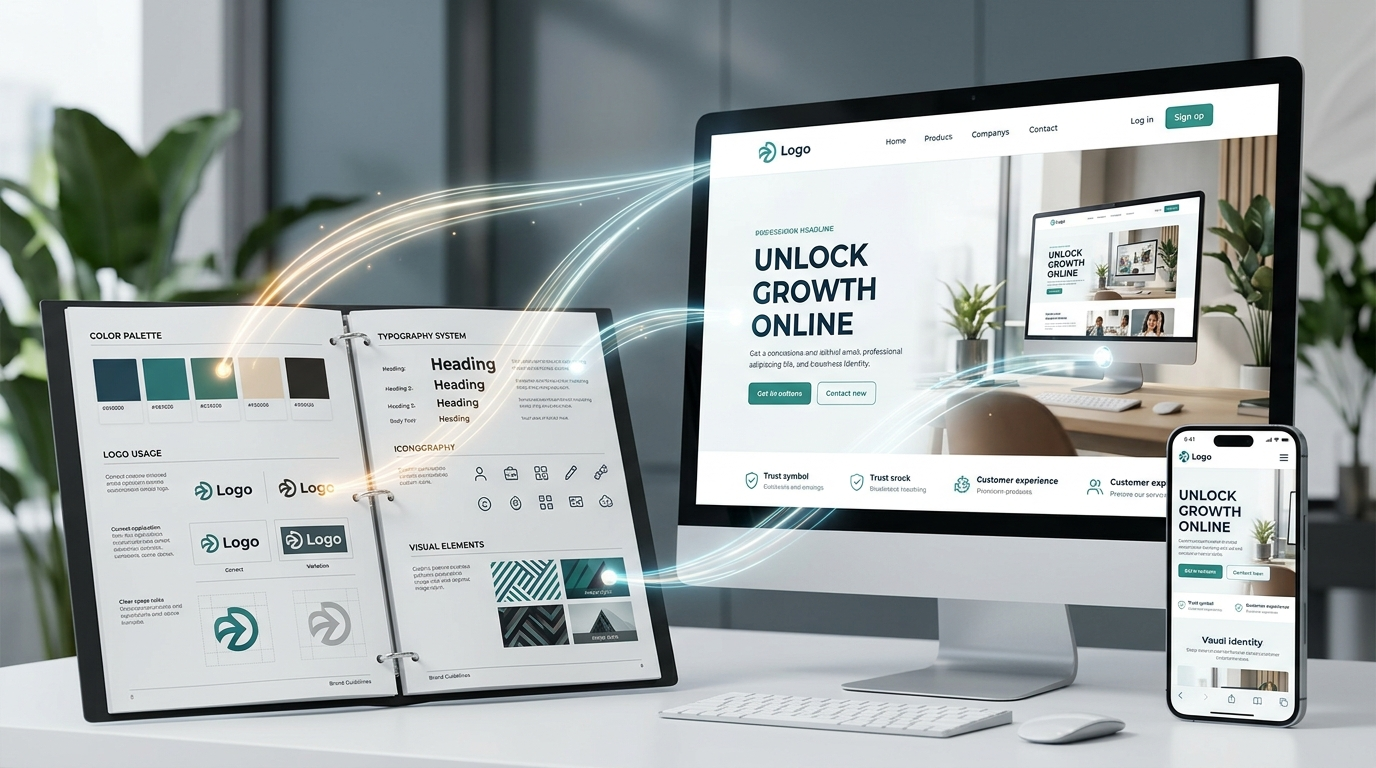
Web Design and Branding: Two Sides of the Same Coin
Be honest. If someone saw your logo design, your Instagram page, and website, would they be able to say they belong to the same company?
For most small businesses, the answer is no. This inconsistency itself creates problems in building brand credibility. Your custom logo design defines your virtual identity, your brand guidelines set the rules, and your web design brings it all together.
When these elements do not align, your visitors feel disconnected. This distrust causes you to lose customers even before they start a conversation or make a purchase.
We’re a Leading Web Design & Branding Agency in the USA
Logo Design Valley is a one-stop solution for branding and web design for startups and first-time founders.
Start Conversations
What Happens to Your Brand When Your Website Looks Generic
A generic website is a pitfall for small businesses. Here’s the simplest explanation we can offer to convince you why is web design important.
- You are a restaurant owner. You’ve invested a significant amount in your branding. Your logo looks quite unique with logo color combinations that instantly position you as a fine-dining restaurant. Warm, upscale, and memorable.
- Your potential customer visits your Instagram profile. The same branding pattern follows, and they’re encouraged to take action. They think, why shouldn’t I book a table here.
- They open your website. But your website is built on a free template. The white background, blue hyperlinks, and the generic sans-serif font make your website look generic.
- They feel instantly disconnected from the impression the logo and the profile made. They don’t book, and you immediately lose a customer.
Brand Consistency Checklist: Does Your Website Match Your Brand?
1- Do the colors match your branding? Are the hex codes exactly the same?
2- Are the fonts on your website the same as or complementary to your logo’s typeface?
3- Does the copy sound like your brand? Does your website’s content complement your overall brand voice?
4- Are your photos/illustrations consistent with the theme?
5- Is your logo completely aligned with your website?
6- If someone visits your Instagram and then clicks on your site, will they feel disconnected?
If you answered “no” to any of these questions, do your business a favor and hire a full-service logo design company like Logo Design Valley. We take care of your branding, logo, and website design from start to finish!
Industry-Specific Web Design: Why One Size Never Fits All
One of the most important tips to improve your web design is to tailor it to your industry’s needs. A law firm and a clothing store cannot have the same web design. The layout, color palette, content layout strategy, and call-to-action placement need to look completely different.
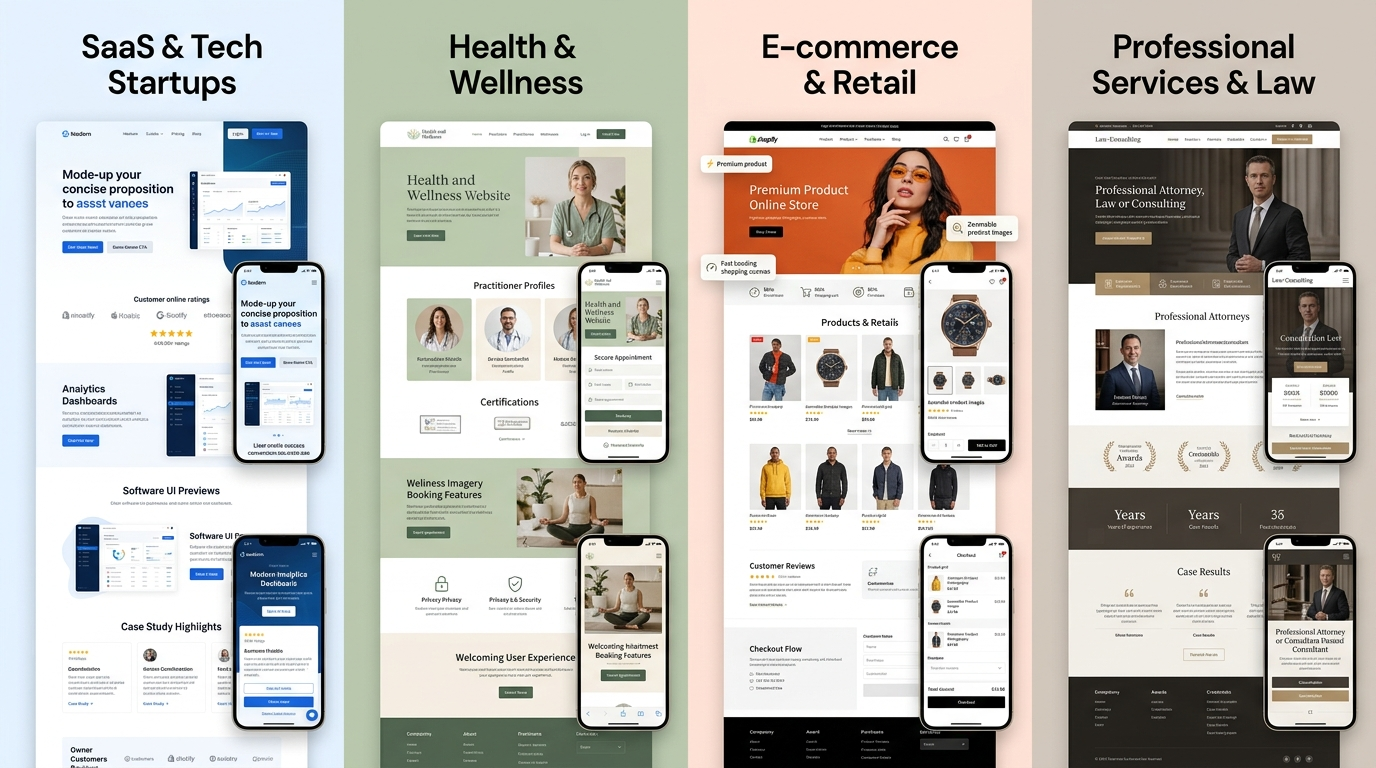
You don’t want to confuse your customers about what you do or what you sell. Here’s what effective web design requires in the industries we work with most:
SaaS & Tech Startups
Clarity: A visitor should be able to get clarity on exactly what you do in eight words or fewer without scrolling.
Proof: SaaS and tech startups run on proven outcomes. Placing customer logos, ratings, and case study snippets reduces churn at the top of the funnel.
CTAs: “Start Free Trial” should be your primary CTA, and “Book a Demo” should be secondary. For small businesses, your website is part of your pitch. A professional web design built on your niche signals professionalism and that you understand your market, positioning, and brand.
Health & Wellness
Color Psychology: A health and wellness brand needs to know how to use complementary colors in the web design. Greens, soft whites, and muted earth tones signal calmness, safety, and wellness.
Credential Placement: Certifications, practitioner bios, and real testimonials need to be visible above the fold.
Privacy Signals: HIPAA compliance notes, privacy policies, and secure booking systems encourage action.
E-commerce & Retail
Speed: Delay in page load time reduces conversions significantly. Fast sites are likely to sell more.
Product Photography: Blurry photos kill the purchase intent. High-quality images with zoom functionality are a non-negotiable for any ecommerce and retail website.
Checkout Process: For an ecommerce store, the checkout process needs to be shorter and faster. A lengthy process will lose you customers.
Professional Services & Law
Typography: A clean font paired with neutral color palettes communicates competence and authority even before a word is read.
Proof of Credibility: Attorney bios, years of experience, case outcomes, and professional affiliations are signals of trust that must be visible and easy to find.
Clear CTA: “Schedule a Free Consultation” CTA on every page without any exceptions because conversion is your goal.
Creating Web Designs For Every Industry
We know the web design standards for your industry better than you do. Let us handle your website!
Start Now
The Web Design Process: What Actually Happens From Brief to Launch
It’s obvious that you’ll have concerns when working with a web designer or an agency. And one of the main ones is the web design process. Your concerns are totally valid.
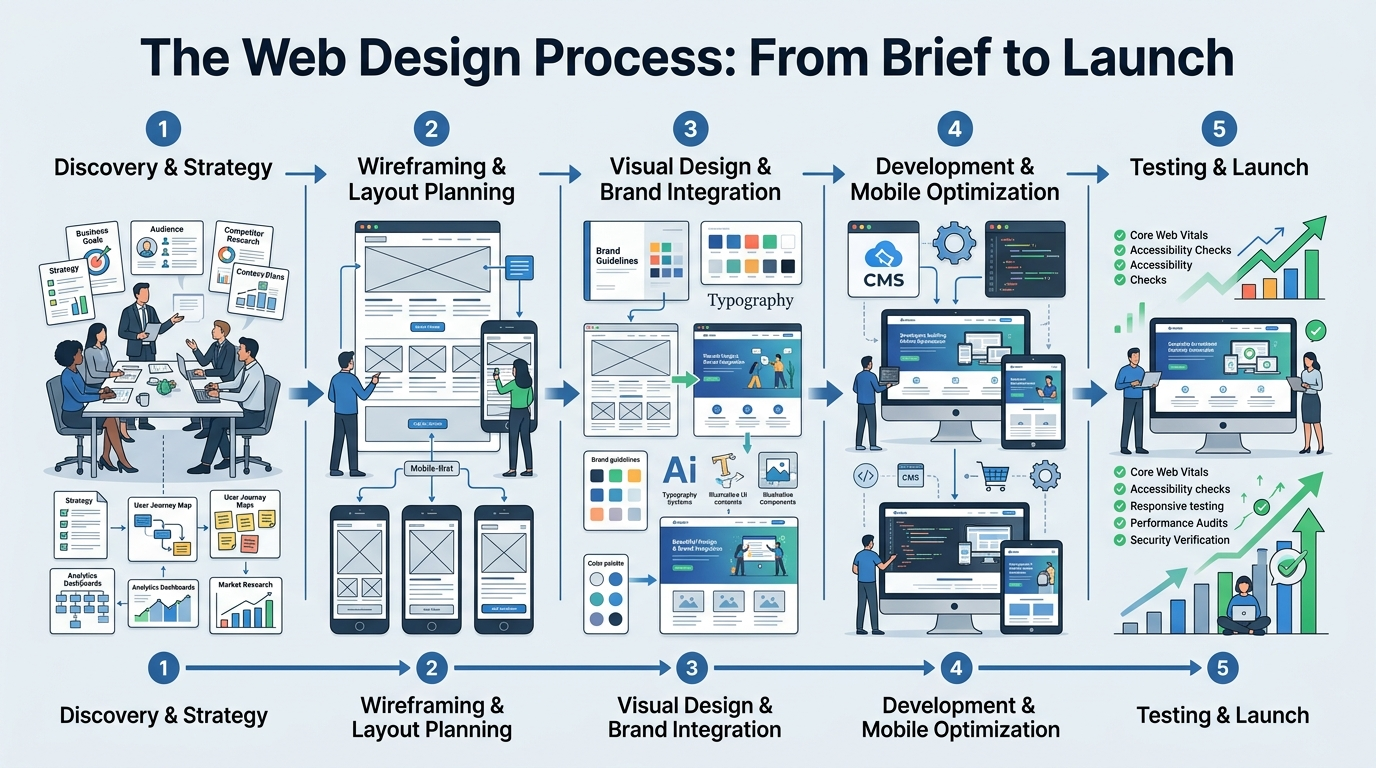
The web design process is somewhat similar to the logo design process, yet very different. Here’s how the process goes when you work with a creative design agency:
- Discovery and Strategy: Any good design is based on extensive research. Your audience, industry, competitors, business, and your goals are the starting point. The content and sitemap are produced even before a single pixel is designed. DIY websites fail because they lack strategy.
- Wireframing and Layout Planning: The site navigation and visual hierarchy come next. The layout determines where content lives, how users navigate, and key call-to-action placement. Mobile wireframing comes first, since most of the traffic comes from mobile users.
- Visual Design and Brand Integration: This is where your brand guidelines are integrated into the design so that it looks like the final website, even before a single block of code is written.
- Development and Mobile Optimization: The approved design is converted into a fully functional website built on platforms like WooCommerce, Shopify, WordPress, or a custom CMS. Every page is optimized for responsiveness across devices.
- Testing and Launch: Before going live, the website is tested for legibility across different screen sizes, browsers, and devices. Core Web Vitals are audited. Accessibility is checked. Once launched, the website is checked for further optimization potential.
1- Template-based: 5-10 business days
2- WordPress: 2-3 weeks
3- Custom ecommerce: 3-5 weeks
For rushed timelines, talk to your designer about turnaround options.
How Much Should a Small Business Spend on Web Design in 2026?
The web design cost in the USA varies enormously. It could cost you $0 to design a website with a DIY tool, or cost you $5,000 for an enterprise-level web design. For small businesses, a realistic range is $999 to $5,000, depending on complexity. Feature-rich websites can even cost more. Here’s what you should expect based on your budget:
| Package | Best For | What’s Included | Price Range |
| Template-Based Website | Pre-launch, MVP, simple service businesses | Up to 5 pages, responsive design, basic SEO, contact form | From $999 |
| WordPress Website | Growing businesses, content-heavy sites, blogs | Custom theme, CMS for easy editing, SEO foundation, up to 8 pages | From $1,299 |
| E-commerce Website | Retail, fashion, food & beverage, product-based businesses | Full store setup, product pages, payment integration, cart/checkout | From $1,699 |
What To Look For in A Professional Web Agency
A professional web design agency takes care of all your web design needs from start to finish. Keep in mind these green flags, the next time you consider a web design company:
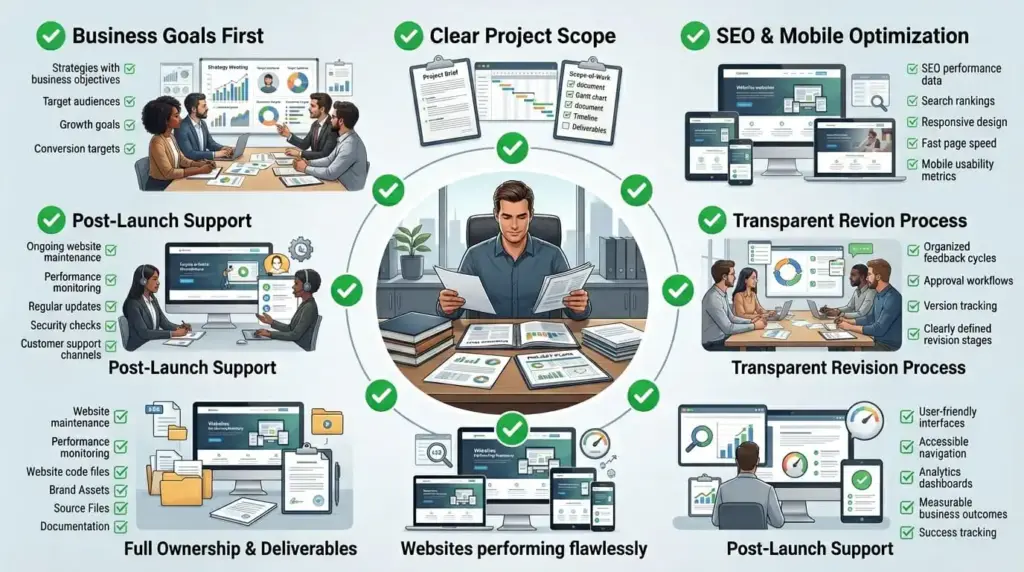
- They ask about your business goals before talking about design.
- They provide a clear project brief and scope of work in writing.
- They show you a portfolio with real results, not just pretty screenshots.
- They explain their revision policy upfront (how many rounds, what’s included).
- They discuss SEO and mobile optimization as part of the base package.
- They hand over full file ownership at project completion.
- They offer post-launch support or a maintenance plan.
Is Your Website Working For You, Or Against You?
You cannot underestimate why is web design important. It’s important to build trust, guide visitors toward a decision, and represent your brand consistently. If it’s doing its job right, then it’s working for you. And if it’s undermining all three, it’s working against you. Every visitor who lands on your site and doesn’t convert is a missed opportunity.
For small businesses, it is especially important to raise the stakes when it comes to web design. We understand that not everyone has the budget. But in 2026, web design is more available to smaller businesses than ever before, and that too at the most affordable prices. All designs are built on strategy, optimized for website user experience, and aligned with your brand identity, serving as a tool for business growth.
Ready to Build a Conversion-Focused Website?
We design websites that focus on encouraging visitors to take action.
Design a WebsiteAuthor Bio

 verified expert
Duaa writes blogs about marketing, branding, web design, and logo design. She enjoys turning ideas into simple, engaging content that helps businesses build stronger brands and connect with their audience in a more meaningful way.
Still choosing the right logo design company?
Get a quick, expert review. No pitch, just clarity on what fits your stage, budget, and growth.