Before hiring a web design agency, evaluate them based on their portfolio, reviews, communication, transparency, pricing, team, and experience.
Choosing the right web design agency for your small business can be challenging and a high-stakes decision. The right web design agency can build your online presence in a way that drives better lead generation, increases revenue, and attracts customers who come back for more.
Once you’ve decided you need a website for your business, the next step is to know how to choose a web design agency that fits your budget, understands your needs, and delivers what’s expected of them.
Too many small businesses waste money on the wrong web design agency because they fail to ask the right questions and evaluate what actually matters.
This guide on “how to choose a custom web design agency” is for business owners with zero technical knowledge who understand that a website is important for business growth. Because getting it designed right with the right design partner matters.
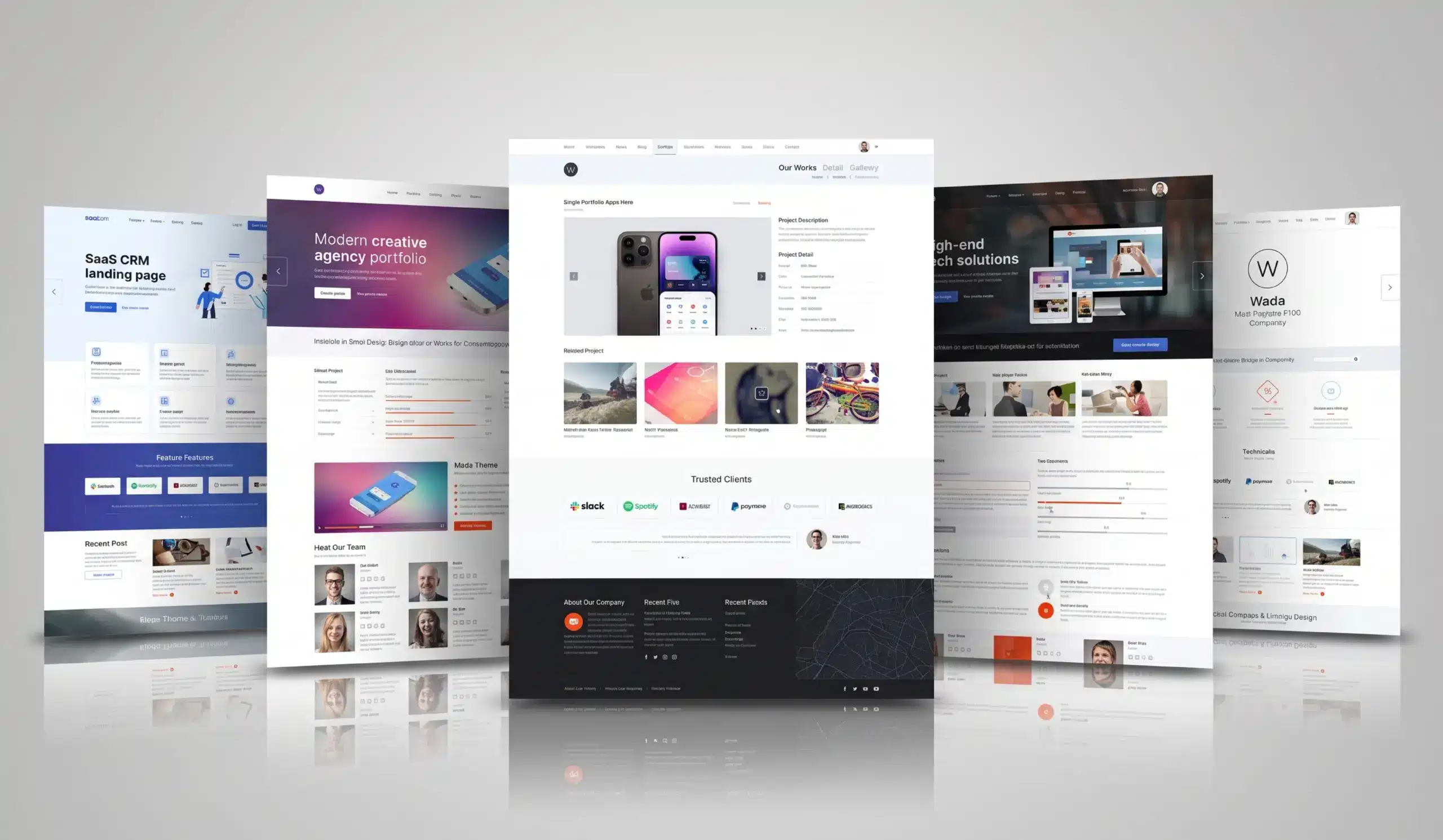
Terminology to know as a small business owner with no design knowledge
As someone with no prior knowledge of web design and development, there are some essential web design terms you need to know. They are extremely helpful when you’re communicating with agencies, and they’re talking in design language.
Responsive Design: A layout that automatically adjusts to different screen sizes, including mobile phones, tablets, and desktops, is called a responsive design.
User Interface (UI): Interactive elements on the website, like buttons, menus, and colors.
User Experience (UX): The experience a customer goes through when they try to navigate and use the website.
Call to Action: A clear prompt that encourages visitors to take action.
Wireframe: The blueprint that shows the layout and structure of the website, designed with the best wireframe tools.
Landing Page: A single page created for a specific marketing goal or ad campaign.
Content Management System (CMS): A tool like Shopify, WordPress, or Drupal that makes it easy for you to edit your website without writing any code.
Domain Name: The web address that people use to visit your website (www.businessname.com).
Website Hosting: The service that stores your website files and makes them accessible online.
Core Web Vitals: Google’s metrics for measuring key aspects of a website’s performance, including loading speed, responsiveness, and visual stability. Determines whether Google likes your website.
SEO-Ready Architecture: A website structure designed to help search engines crawl, understand, and index your pages.
Brand Guidelines: A complete branding document that helps align your website with your logo usage guidelines and branding.
Source Files: The original files used to build and develop a website, including its code and other technical assets.
Design Files: The original visual files in different file formats, used to create the website’s design, such as layouts, graphics, and mockups.
Live Website: The final version of the website accessible to visitors online.
Even if you don’t know how to design a web page, these terms can still be useful.
You know the terms. Now let’s talk about your website.
From wireframes to launch, get expert web design that turns your business goals into a website built to perform.
Steps on How To Choose a Web Design Agency
Websites influence 94% of a visitor’s first impression of a business. If your website lacks something, what impression are you making on your visitors?
You need to get it designed right. There are no exceptions.
You might be thinking: I understand why web design is important, and I need it for business growth, but how do I choose a web design agency?
We break down the process in six easy steps, so in the end you have the top web design agency picked and ready to start the project with.
Step 1: Define your goals, budget, and scope before you start looking
You need to know your business first.
The goals you have for your business help the web agency understand the results you expect from a web design. The budget is how much you should spend on a website. Scope is based on the functionality, pages, and visuals you want to add to your website.
Every business stage has different needs. A new founder experimenting with an idea needs speed and a smaller investment. An established business needs consistency maintained, or, if they’re redesigning, they don’t want to lose equity. If you’re considering a redesign, find out the reasons your website is not bringing in customers.
Next, you need to know what features you want to have on your website. For each business stage, there’s a different scope.
To test the waters, a template-based website works well. A business in its growth stage or rebranding phase needs a custom website. An ecommerce website has an entirely different purpose.
Make sure you’re clear on why you need a website in the first place. The more specific you are with your goals, budget, and scope, the easier it gets to hire a web design agency.

Small Business Insight
Don’t build a website bigger than your business needs. If you’re new and testing your idea, it’s best to start with the pages and features that help you understand the market demand. You can always add more as your business grows.
Step 2: Where and how to shortlist candidates
The next step is researching potential web design agencies that meet your needs.
You can use multiple sources to shortlist agencies you find reliable.
Referrals: You could ask friends, family, colleagues, or business partners if they’ve worked with a web design agency before.
B2B Platforms/Directories: Platforms like Clutch, Trustpilot, DesignRush, or Google Business Profile can let you compare agencies and provide verified reviews.
Company Website: Take a look at the company’s website. Evaluate how their site looks, what other services they offer, how their process works, and the industries they specialize in.
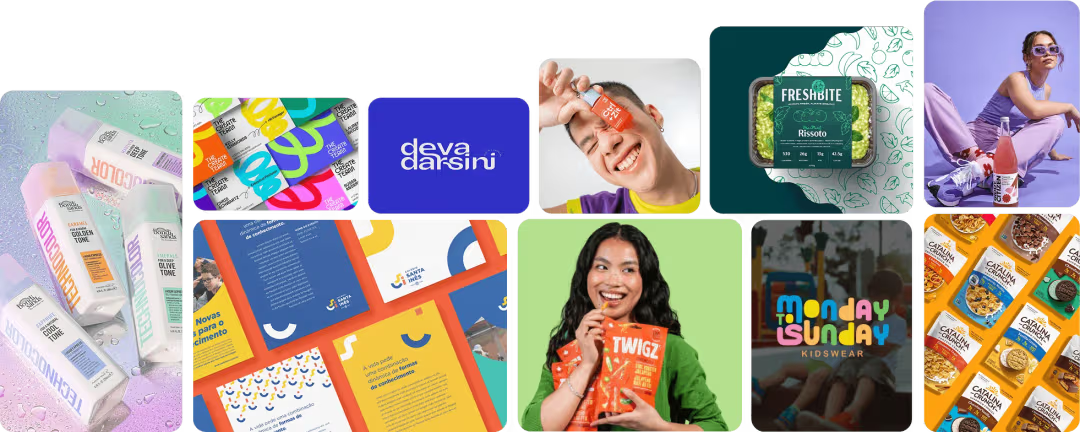
Portfolio/Case Studies: There is no better proof of an agency’s capabilities than its portfolio or case studies. You can see their approach and how they handled similar projects like yours.
Client Reviews: Go beyond the testimonials available on their website. Their Google reviews, comments from people they’ve worked with on LinkedIn, or even different platforms can provide you with verified client reviews.
Budget: Another way to shortlist agencies is to see whether they fit in your budget. Some offer monthly subscriptions, some provide flexible quotes based on project scope, and others have a fixed price and deliverables.
Ownership: Businesses face a lot of problems when they don’t know how to trademark or copyright a logo. Imagine the struggle with web design. It’s your most important brand asset, and you don’t fully own it. Look for a web design agency that makes ownership rights clear.
Narrow down your list to the must-haves for your website.
Small Business Insight
Shortlist agencies that have worked with businesses at your stage. An enterprise-level agency might not be the right fit for a small business.
Step 3: Evaluate the portfolio like a buyer, not a fan
The portfolio will attract you, but you need to know more.
Agencies have flashy portfolios that’ll lure you into hiring them. Don’t just jump right into it. Check for real work.
Ask them to share live URLs of the websites they’ve worked on. See if the website’s performing well. Does the website exist? Does it load fast? Is it responsive? Was it an actual business or a demo project?
Then ask who wrote the code. Can they explain the tech stack clearly? What were the reasons behind choosing those platforms?
How do they use AI? There’s no harm in using AI to speed up the design process; everyone’s using it. But make sure they know how the code works. Ask them about the code from a portfolio website. If they’re able to explain it well, you’re good to go.
Small Business Insight
Prioritize proof over looks. A website might look good in a portfolio, but performance is what matters the most. Check the live website URLs.
Step 4: Understand what’s actually in the pricing
When it comes to pricing, there are three ways you can budget for your website.
- Subscription
- Flexible quotes based on project scope.
- Fixed pricing with deliverables already mentioned.
In a subscription, you pay for the services monthly. Some agencies set the price based on project scope. You talk to them, share your needs, and they give you a quote for the deliverables.
Other agencies list fixed prices on their website, with deliverables that fit different business stages. The packages include essentials needed to build a brand. But for added functionality or an additional page, you’ll have to pay extra. They’re good to get you started.
When you opt for fixed pricing (the easiest and most budget-friendly), the website cost for small businesses looks something like this:
| Build type | Typical range | Usually included | Watch for exclusions |
| Template-based (Single page – 5 pages) | $500 – $1,500 | Pre-built layout, basic branding, 3–5 pages, responsive design | Custom features, copywriting, advanced SEO |
| Custom (WordPress/CMS) | $1,500 – $3,500 | Custom layout, CMS setup, responsive design, basic SEO, forms | Ongoing maintenance, advanced integrations, copywriting |
| E-commerce | $2,000 – $5,000+ | Product catalog, checkout/payment setup, responsive design, basic store configuration | Inventory sync, custom integrations, app/plugin fees |
A professional small business website typically costs around $1,000 to $3,000 when purchased as a fixed-price package. If you’re wondering, “Is $1,500 a realistic price or are you being ripped off?” Then yes, it is a realistic price for a custom web design.
Small Business Insight
Don’t compare agencies by price alone. Compare what you get for the price. A cheaper package may leave out some essentials like SEO, mobile optimization, or post-launch support.
Step 5: Ownership, IP, and contract terms
Discuss ahead of time how ownership of all files will be transferred.
This is one question we get asked most often: What happens to ownership rights once the project is complete? We transfer them to you, but some agencies are not very transparent about it.
If there’s nowhere mentioned about the file ownership, but during the call they say you’ll own it, and then when you finally sign the contract, ownership isn’t mentioned anywhere, it’s a deal breaker. You don’t want to work with a company that’s not clear about the terms and conditions.
During initial calls, always ask about the ownership, IP handover, and if there’s a written contract. This will save you from a lot of trouble in the future.
Small Business Insight
Get ownership in writing before you pay the agency. Verbal promises are easy to forget, and they’re not legally binding. Your contract needs to clearly state what you own, what you’ll receive, and what happens if you stop working with the agency.
Step 6: Check process and communication
The first sales call can tell you a lot about the agency.
When you reach out to agencies for the initial consultation and discussions, notice how they communicate. If they delay responses, aren’t clear about pricing and deliverables, or don’t ask questions about your business, that’s a red flag.
How do you know they won’t ghost you? It’s in the way they handle your questions.
Ask about turnaround time so you’re sure they won’t miss a deadline. Write down some questions about the tools they use, how they handle changes in the scope, how they manage revisions, or what happens when they miss a deadline.
Choosing someone for a website design is a tightrope walk. You’re unsure if they’ll ghost you, miss deadlines, become unresponsive, or lock you out of your own site. But if you know how to choose a web design agency with the right judgment, you’re good.
Just don’t pay without calls and discussions.
Small Business Insight
One of the best tips for choosing a web design company is to choose someone who works the way you work. If you’re a small team, you’ll need clear communication, quick answers, and a simple process.
Spend Your Website Budget Where It Matters.
Get a custom WordPress website for $1,299, with professional design, responsive development, CMS setup, and the essentials your small business needs.
20 questions to ask a web design agency before you sign
You need to ask the right questions to figure out a company’s capabilities, skills, and style. The future of your business should not rely on a sales pitch. The goal is to have a complete conversation about goals, understanding, and processes.
Here are some questions small businesses should ask a web design company in 2026:
- What does your typical project timeline look like, from the discovery phase to the end of the project?
- Can I see 2–3 examples of work you’ve done for businesses in my industry?
- Who owns the code, design files, and content once the project is complete?
- Is SEO built into the structure, or is it a separate add-on?
- What’s included in the quoted price, and what do you charge extra for?
- After how many rounds of revisions do you charge extra?
- How would you communicate with me, and how often?
- What is the project management tool you use to track project progress?
- What happens if the scope changes mid-project?
- Do you offer post-launch support, and what does that include?
- Can you show me a case study with measurable results?
- What’s the process if I decide not to work with you and opt for another agency?
- Can you handle my logo and branding, or is it just the website?
- What is your approach to UX (user experience) for my industry?
- How do you handle mobile-friendliness?
- Do you use AI, and what do you use it for?
- Can you teach me how to use the tools once the site is live?
- What is your testing process, and how do you manage quality assurance?
- Who do I talk to if I want a redesign a year later?
- Do clients come back to you for redesigns?
These questions should be enough to get an overview of the credibility, communication, and transparency of the web design agency.
Red flags and Green flags in a web design agency
Unfortunately, there are a lot of shady providers in the industry. A clear breakdown of red flags and green flags can help when evaluating custom and ecommerce web design agencies.

Green Flag
- You get a clear breakdown of what each part of the project costs.
- They explain each step and give you a clear timeline from start to launch.
- The contract clearly states that you own the website and files when the project is complete.
- They can show real websites and, when available, results such as more leads or sales.
- They recommend the platform that best fits your website, budget, and needs.
- They keep you updated and let you know what’s happening throughout the project.
- They consider SEO and accessibility while building your website.
- They set realistic expectations and explain how the website can support your business goals.

Red Flag
- The price is unclear, and you don’t know what you’re paying for.
- They don’t give you a clear process or deadline.
- The contract doesn’t say who owns the website and its files.
- Their portfolio only shows pretty screenshots with no proof of results.
- They push you to use a platform that may not fit your business.
- They become hard to reach after you pay the deposit.
- They don’t mention things like Google visibility or website accessibility.
- They promise instant results or guaranteed Google rankings.
Should you hire a remote web design agency or a local one?
Honestly, it’s totally up to you.
A remote web design agency is better in terms of:
- A wider talent pool.
- Expertise beyond local geography.
- Competitive pricing, since so many agencies work remotely.
A local web design agency is better when:
- Complex integrations require in-person meetups.
- Founders want hands-on, face-to-face guidance on the process.
The only thing that matters is collaboration and communication. You could search for a “web design agency near me” for local recommendations, but most agencies now operate remotely.

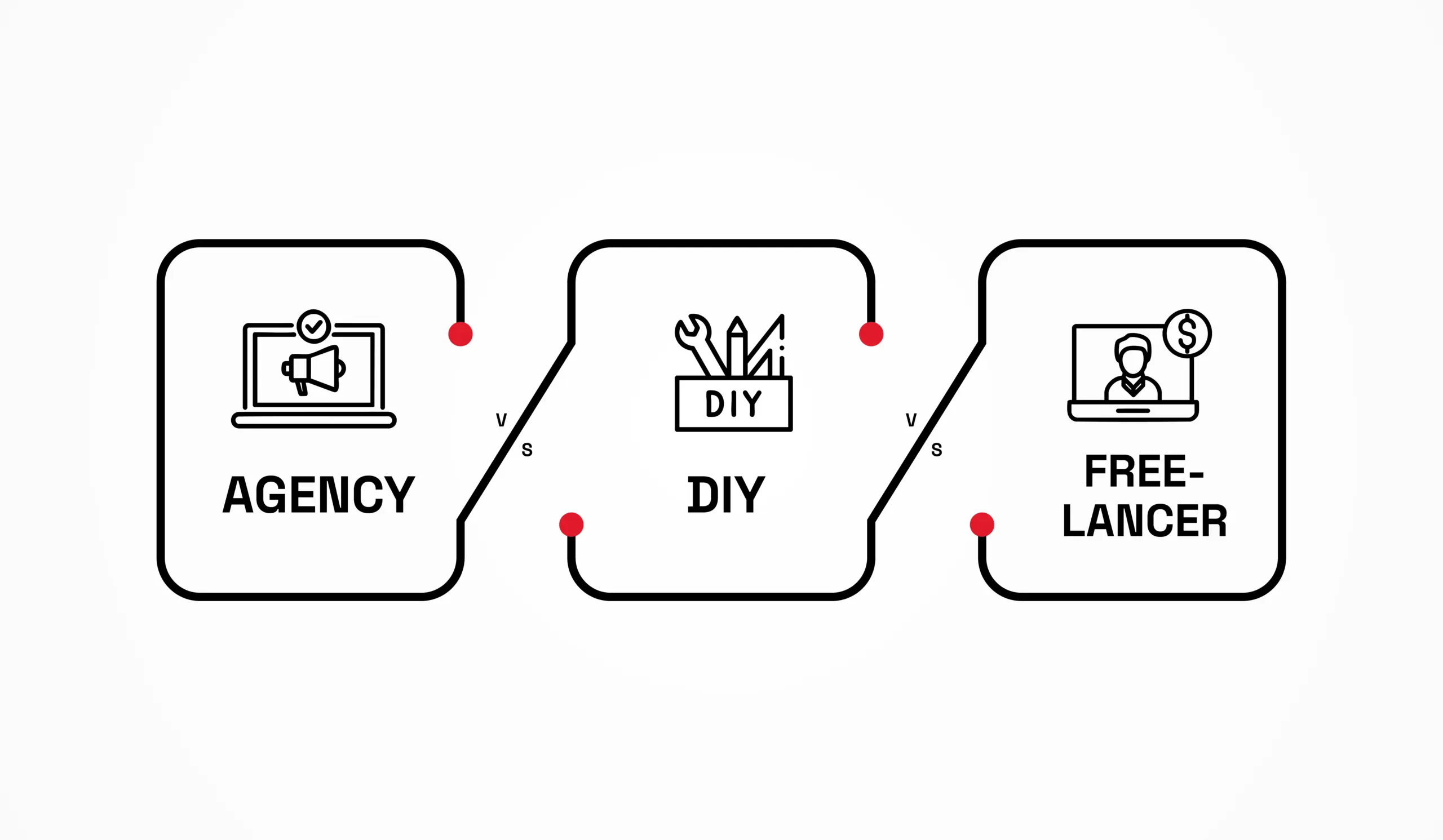
Agency vs. Freelancer vs. DIY Builder: Why do you need an agency when you have cheaper options?
No-code development is becoming common among small businesses.
Free website builders and freelancers are good options, but not the best. The problems don’t lie in the process or communication, but they lie in creativity, originality, and brand alignment.
Agencies are your last resort when it comes to building a website because, in the end, a business needs quality.
| Factor | Agency | Freelancer | DIY Builder |
| Cost | $$ – $$$ | $ – $$ | $ |
| Speed | Moderate | Fast, depending on availability | Fastest |
| Growth | Great for growing businesses | Depends on the freelancer | Limited by the platform |
| Ownership | Usually clear with a good contract | Depends on the agreement | You own the content, but the platform controls the site |
| Best for | Businesses that want full design and support | Simple projects and smaller budgets | Testing an idea or launching quickly |
How long should the selection process take?
Choosing a web design company is one of the most important decisions you’ll make for your business. Here’s a realistic week-to-week timeline of the selection process.
Weeks 1–2: Define goals and budget, build your shortlist.
Weeks 2–3: Request proposals, review portfolios, hold discovery calls.
Week 4: Compare proposals side by side, ask the final questions that’ll lead you to a decision.
Week 4–5: Sign contract, confirm ownership terms, kick off discovery phase.
Weeks 5–8+: Design, build, and revision rounds through to launch.
Recommended web design agencies for small businesses in the USA
To get you started, we have a few recommendations to speed up the shortlisting process.
Logo Design Valley: Best for businesses that want a single design team for logo design, branding, and website design.
Orbit Media: Best for B2B or industrial companies that prioritize lead generation over branding and aesthetics.
Straight North: Best for an ideal choice for ecommerce businesses that want SEO, paid advertising, and web design in one place.
Web Tonic: Best for growing businesses with real sales already that are looking to scale.
Superside: Best for well-established businesses that need a reliable creative team to produce a large amount of work.
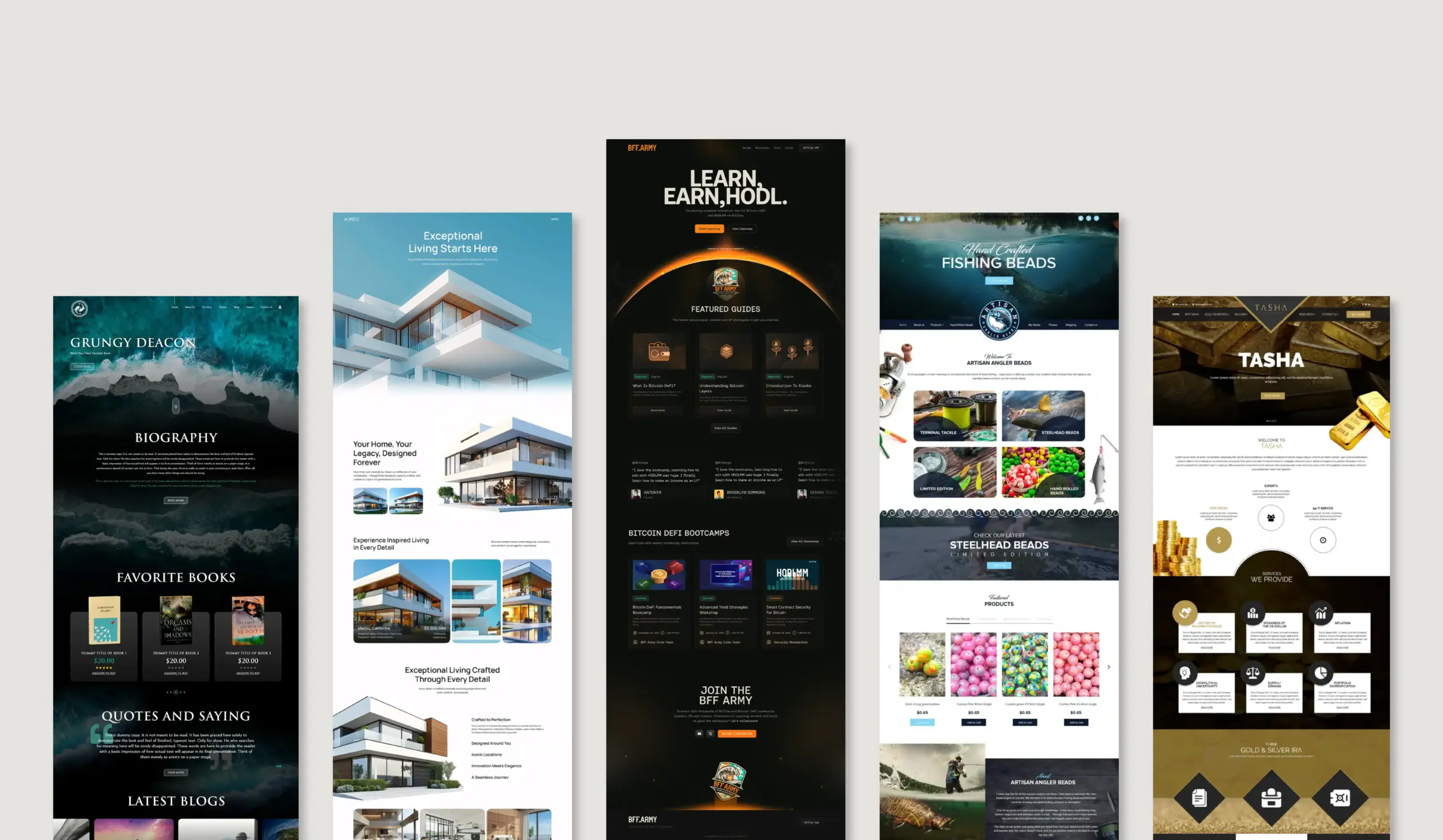
Why bundling your logo, brand, and website under one agency saves time and money
When you’re building your business from scratch, your priority should be an agency that can deal with all your needs. For any small business, the basics are logo design, brand identity, and web design. Consistency in these three will build your brand credibility.
Do the agencies you’ve shortlisted take care of all three, or do you have to source each one of them from a different agency?
This should be your major concern as a small business. You might know how to choose a web design agency, but can you find one that values your time and money?
Logo Design Valley gives you all three services under one roof. We started as a logo design company, and now we’ve evolved into a web design and branding agency, too. So, if you’re on your quest to choose a web design agency for your small business, we’re worth considering.
Is Your Website Holding Your Business Back?
Get a website audit that shows what’s working, what isn’t, and where your site could be losing potential customers.
Author Bio

 verified expert
Duaa writes blogs about marketing, branding, web design, and logo design. She enjoys turning ideas into simple, engaging content that helps businesses build stronger brands and connect with their audience in a more meaningful way.
Still choosing the right logo design company?
Get a quick, expert review. No pitch, just clarity on what fits your stage, budget, and growth.